As Cool Neighbourhoods moves towards its final project period, an important question is coming into sharper focus: how can the experience gained in pilot neighbourhoods become practical guidance that other municipalities can use?
At the partner meeting in Goes, Tom Bosschaert, CEO of EXCEPT, presented work on the project’s ‘Beat the Heat’ guidance and the next steps in strengthening its supporting resources.

Tom Bosschaert of EXCEPT presents the ‘Beat the Heat’ work to Cool Neighbourhoods partners in Goes. Photo: Cool Neighbourhoods partner contribution.
A practical route from heat stress to neighbourhood action
The draft ‘Beat the Heat’ guide sets out how to prepare a Neighbourhood Heat Stress Action Plan (NHSAP). It follows five connected stages: initiation, intelligence gathering, planning and design, execution, and operations and monitoring. Community co-creation is woven through the approach, with residents and stakeholders involved before design choices are finalised.
The guidance is intended to help local authorities consider not only trees, shade, greenery, water and de-paving, but also political support, soil and infrastructure constraints, budgets, community priorities and long-term maintenance. It includes planning templates and data-collection tools intended to make the approach adaptable beyond the original pilot locations.
Learning from nine pilots
EXCEPT also outlined planned updates to the Empowerment Process Guidebook, the finance options resource and ‘Beat the Heat’. Pilot partners will be invited to contribute concise accounts of their participation processes: what they did, where they adapted the recommended approach, what worked and what they would change. The intention is to turn these varied experiences into more useful, evidence-informed guidance for future users.
For the financing resource, EXCEPT described an extension towards business models for cooling measures, including how interventions might be maintained and supported after construction. A possible shared online Cool Neighbourhoods hub was also introduced as a concept for bringing together resources, tools and knowledge exchange; it is not yet a confirmed project platform.
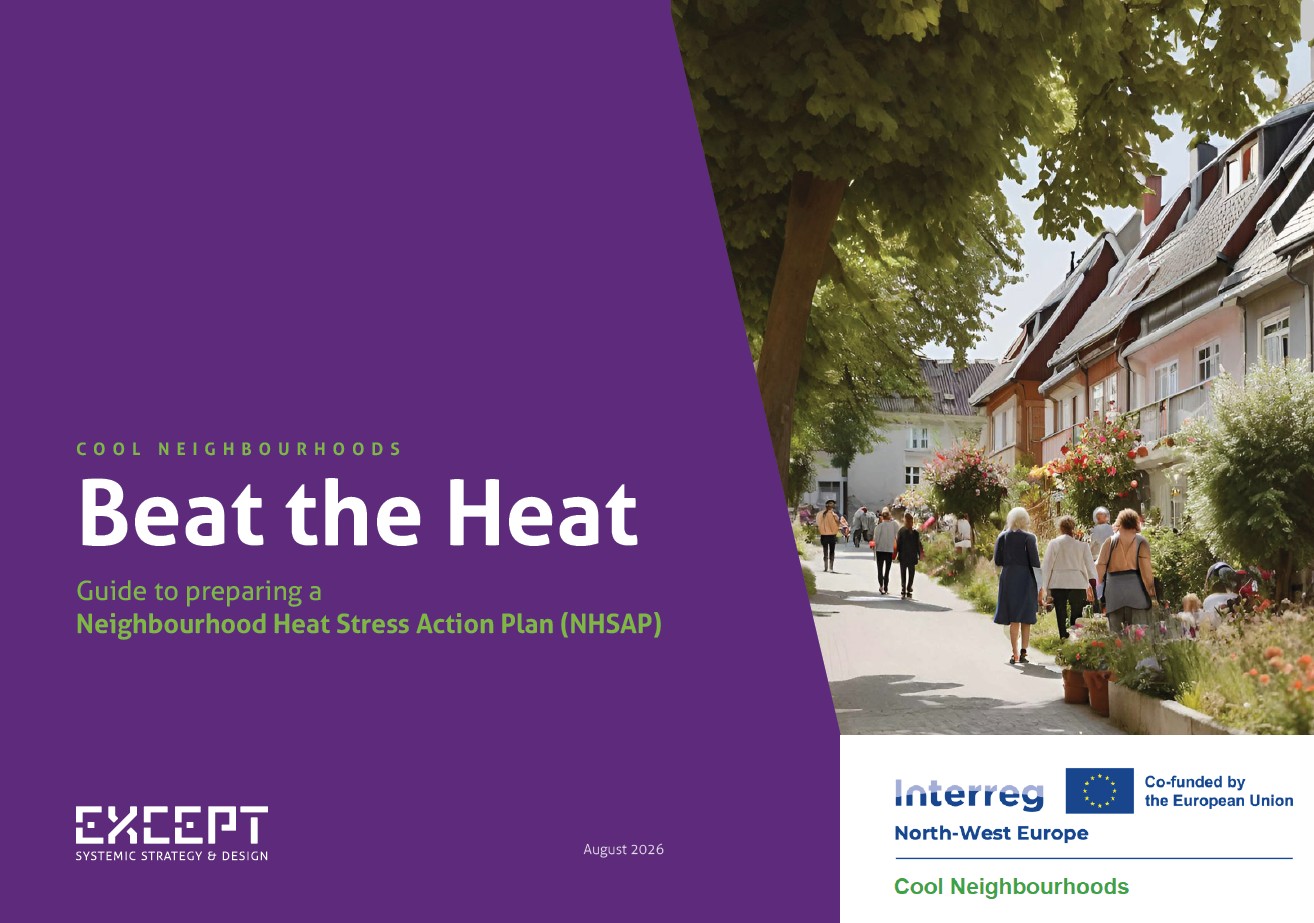
‘Beat the Heat’: draft guide to preparing a Neighbourhood Heat Stress Action Plan. Source: EXCEPT / Cool Neighbourhoods, August 2026 draft.
Linking technical outputs with the final project phase
The wider partnership discussion, led by project coordinators Tiny and Tako, considered the remaining implementation, reporting and dissemination work. Topics included consolidating pilot implementation and evaluation findings, capturing lessons from Communities of Practice, and planning opportunities to share the project’s tools with organisations beyond the partnership.

Partners discussing project delivery and the final work programme at the Goes meeting. Photo: Cool Neighbourhoods partner contribution.
From project resources to wider uptake
The value of the Goes discussions lies in connecting real neighbourhood experience with guidance that can travel. The next stage is to refine the materials with partner feedback, distinguish completed results from work still under development, and make the lessons accessible to local authorities facing similar heat-stress challenges across North-West Europe.