Introduction: A Defining Moment for Cool Neighbourhoods
On the 12th March 2026, partners, stakeholders, and invited experts gathered in Middelburg, Netherlands, for the Cool Neighbourhoods Mid-Term Conference — a pivotal moment in the project’s journey.
However, this article goes beyond a simple reflection on the conference.
👉 It serves as the introduction to a series of six in-depth articles, each exploring a key theme emerging from the conference and the wider project work.
Bringing together expertise from across Europe, the conference marked a clear transition:
👉 From analysis and research (Grey)
👉 Towards implementation and visible transformation (Green)
At this stage, the project can best be described as operating in an “Emerging Green” phase — where knowledge is no longer theoretical, but actively shaping real-world interventions.
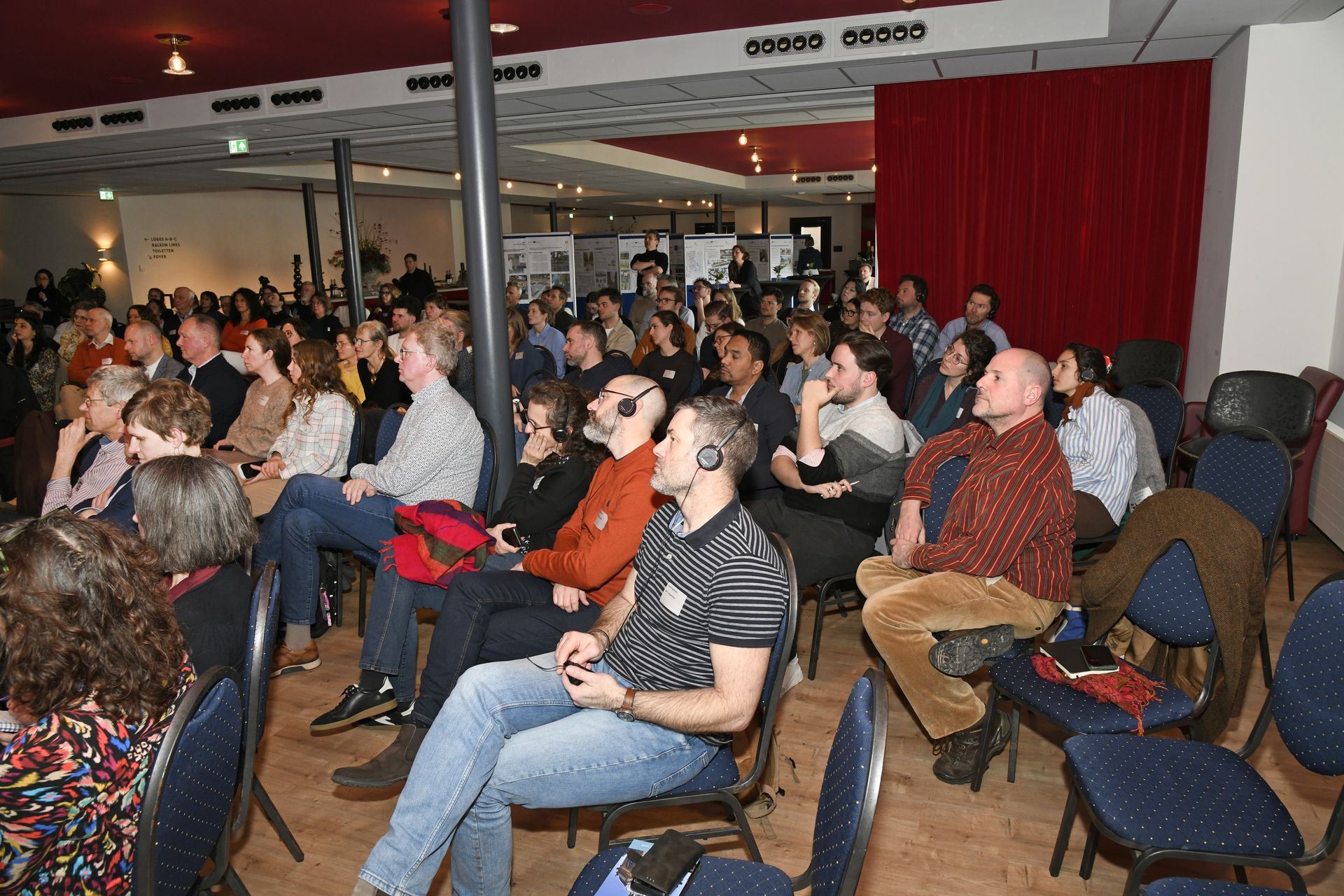
Image: Cool Neighbourhoods Mid-Term Conference, Middelburg – bringing together partners and experts to translate knowledge into action.
Key Themes from the Conference — and the Series Ahead
The conference highlighted several interconnected themes that are central to the Cool Neighbourhoods approach.
These themes now form the foundation of the six-article knowledge series, each exploring how these concepts are being applied in practice across pilot areas.
1. Co-Creation and Citizen Engagement
Effective climate adaptation requires active involvement from communities.
Co-creation approaches demonstrated that:
- Residents provide essential local knowledge
- Engagement increases acceptance of interventions
- Social cohesion is strengthened through participation
👉 This theme will be explored further in the series, highlighting how citizen science and engagement are shaping neighbourhood transformation.
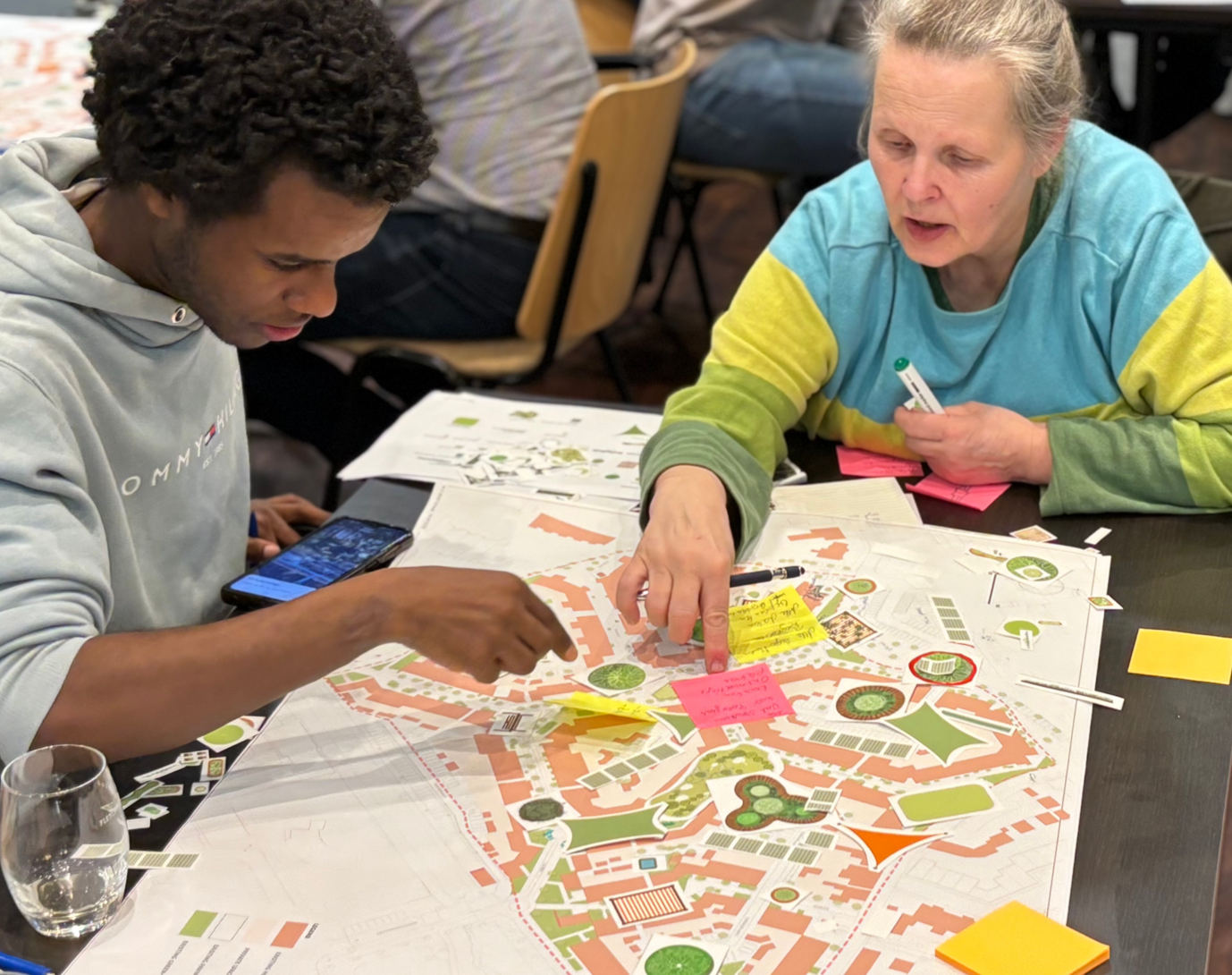
Image: Co-creation in practice: engaging residents in shaping climate adaptation solutions within their neighbourhood.
2. Nature-Based Solutions and Green Infrastructure
The importance of moving beyond isolated green interventions towards integrated systems was strongly emphasised.
Nature-Based Solutions can:
- Reduce urban heat
- Improve biodiversity
- Support water management
- Enhance liveability
👉 Their effectiveness depends on strategic planning, connectivity, and long-term integration — explored further in the dedicated article.
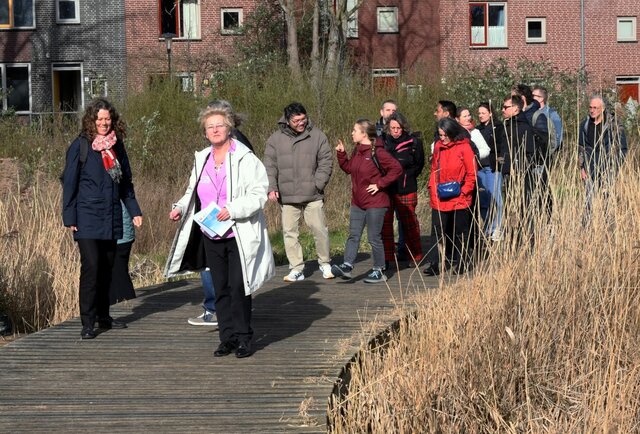
Nature-based solutions implemented within Cool Neighbourhoods pilots to reduce heat stress and improve liveability.
3. Data, Monitoring and Decision-Making
Data-driven approaches are essential to:
- Understand heat stress patterns
- Identify priority areas
- Measure impact
Tools such as:
- Heat stress mapping
- Digital twins
- Monitoring systems
enable cities to make informed, evidence-based decisions.
👉 The series will demonstrate how these tools are already being applied within pilot areas.
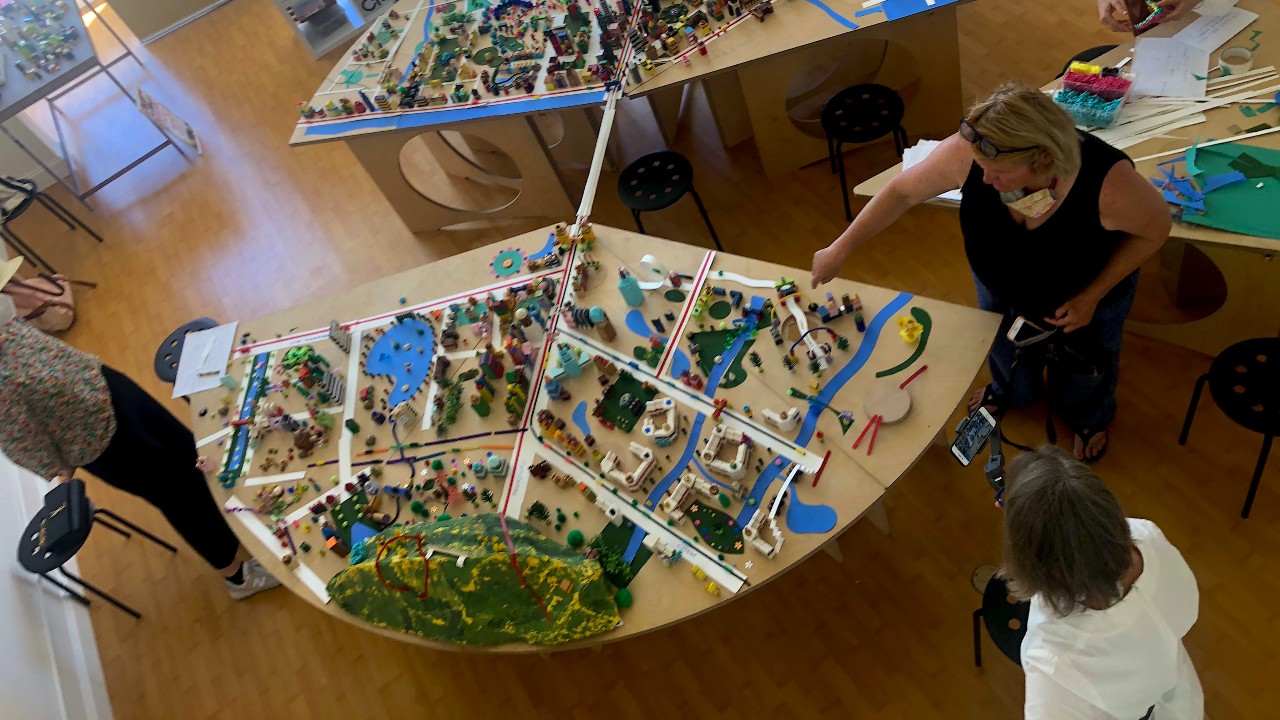
Image: Citizen science in action: temperature sensors deployed to understand urban heat dynamics.
4. Climate Futures and Long-Term Planning
Cities must plan for uncertain futures.
Scenario-based approaches help:
- Anticipate risks
- Test interventions
- Develop resilient strategies
👉 This ensures that solutions implemented today remain effective in the future — a key focus of one of the upcoming articles.
5. Capitalisation and Policy Uptake
A strong focus of the conference — and the series — is on capitalisation.
Ensuring that project results are:
- Reused
- Scaled
- Transferred across regions
Strengthening European Cooperation Through Capitalisation
The development of the policy paper reflects a broader evolution in European cooperation.
There is an increasing emphasis on:
- Reuse of existing knowledge
- Scaling proven solutions
- Cross-programme collaboration
- Efficient use of public funding
👉 Cool Neighbourhoods is positioning itself at the forefront of this shift.
From Pilot Actions to Scalable Solutions
The final theme focuses on how local interventions can move beyond pilot areas.
👉 The series will demonstrate how tested solutions can be replicated and adapted across different cities and regions in North-West Europe.
From Grey to Green: A Project in Transition
The Mid-Term Conference clearly demonstrated that Cool Neighbourhoods has moved beyond initial research phases.
The project is now:
- Testing solutions in real environments
- Generating measurable results
- Engaging communities directly
- Supporting policy development
👉 This places the project firmly in the “Emerging Green” stage — where transformation is visible, but still evolving.
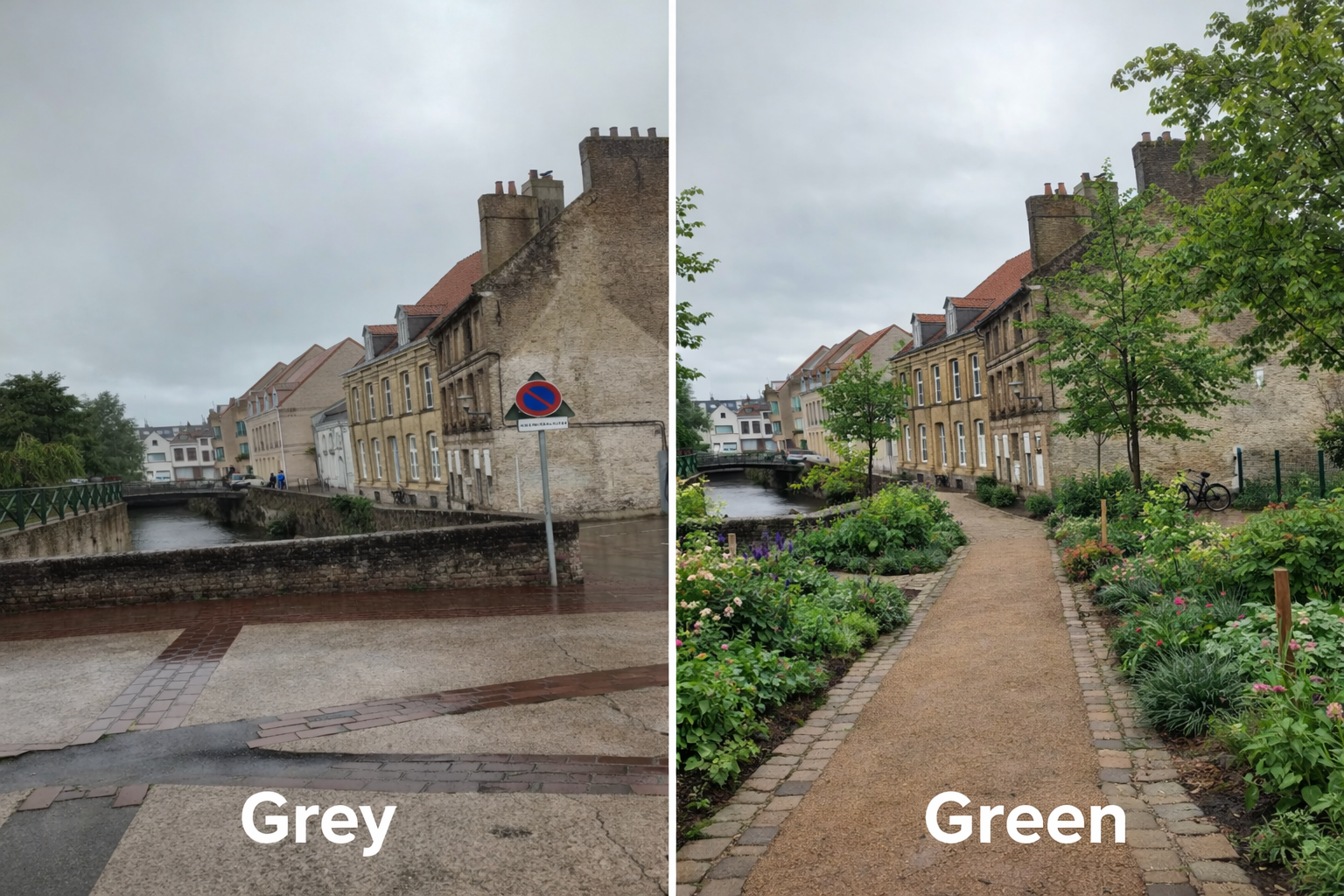
Image: Saint Omer, France – Green Hub in transition, Grey to Green.
Why This Matters for Cities and Regions
The outcomes of the conference — and the insights explored across this series — provide immediate value for municipalities and stakeholders.
Cities can use these outputs to:
- Develop or refine heat adaptation strategies
- Implement Nature-Based Solutions
- Engage communities in co-creation processes
- Apply data-driven decision-making tools
👉 Importantly, these approaches are not future concepts —
they are ready to be applied now
Conclusion: From Knowledge to Action
One of the greatest challenges in European cooperation is bridging the gap between knowledge and implementation.
This six-article series — building on the Cool Neighbourhoods Mid-Term Conference and its policy direction — directly addresses this challenge.
👉 It demonstrates that:
- Applied projects can produce structured, transferable knowledge
- Implementation-focused programmes can lead in policy innovation
- Capitalisation is most effective when outputs are usable from day one
Looking Ahead
The transition from Grey to Green is well underway.
The next phase will focus on:
- Scaling successful interventions
- Strengthening policy integration
- Expanding impact across regions
👉 The message is clear:
The solutions already exist - The priority is implementation.