As part of the Cool Neighbourhoods project, Differdange continues to demonstrate how meaningful public involvement can accelerate climate adaptation at the local level. The city’s emerging Green Hub is being shaped not only by municipal experts but by families, teachers, schoolchildren, and community groups, all working together to reimagine previously grey and underused spaces.
Recent events at the elementary school brought this commitment to life. The school hosted a series of interactive community sessions, combining information-sharing, practical demonstrations, and discussions on how residents can contribute to a more climate-resilient neighbourhood. The atmosphere was collaborative and energetic, as participants explored ideas for shade, biodiversity, water infiltration, and new forms of outdoor learning.
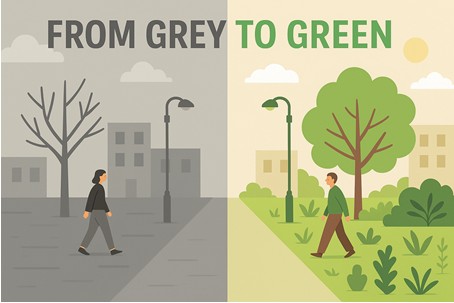
From Grey to Green: A Collective First Step
One of the key activities was a community planting event involving children, parents, local volunteers, and school staff. What was once a plain, paved area is now beginning its transformation into a living green wall and shaded courtyard, with early plantings symbolising the first phase of long-term stewardship.
The involvement of young people was especially striking. Children took an active role in planting and discussing what a cooler, greener school environment should look like. This hands-on participation builds climate awareness at an early age and strengthens their connection to the place they learn and play. As part of the co-creation process, pupils were invited to sketch their ideas for a new “sensory garden”. Their drawings highlight colourful flowers, plant corridors, learning paths, and playful green spaces — a child’s vision of what a cool, comfortable, and nature-rich schoolyard should feel like.
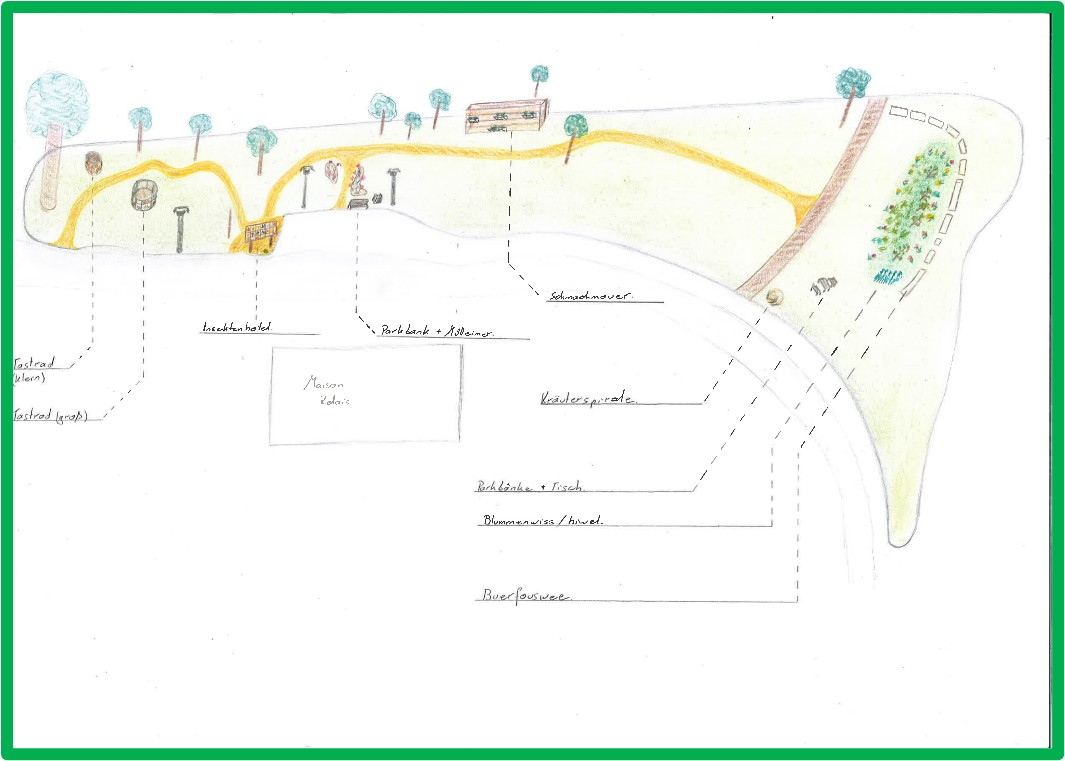
Image: Designed by Children for Children- Co-Creating the Differdange Sense Garden
These creative inputs demonstrate how early engagement builds ownership, imagination, and excitement for the transformation ahead. The Sense Garden concept is now being refined with the community, ensuring that the final design reflects the voices of the pupils who will use the space every day.
Community Ownership as a Driver for Climate Resilience
Differdange’s approach embraces co-creation as a core principle. Rather than designing the Green Hub behind closed doors, the municipality has opened the process to residents, encouraging people to share ideas, concerns, and priorities. These conversations ensure that the final design reflects not only technical solutions but the daily lived experience of those who use the space.
Workshops featured presentations from local partners, open discussions, and interactive boards where residents could contribute suggestions. Participants explored ways to link biodiversity with cooling functions, integrate nature-based solutions into school activities, and create outdoor spaces that feel safe, comfortable, and welcoming year-round.
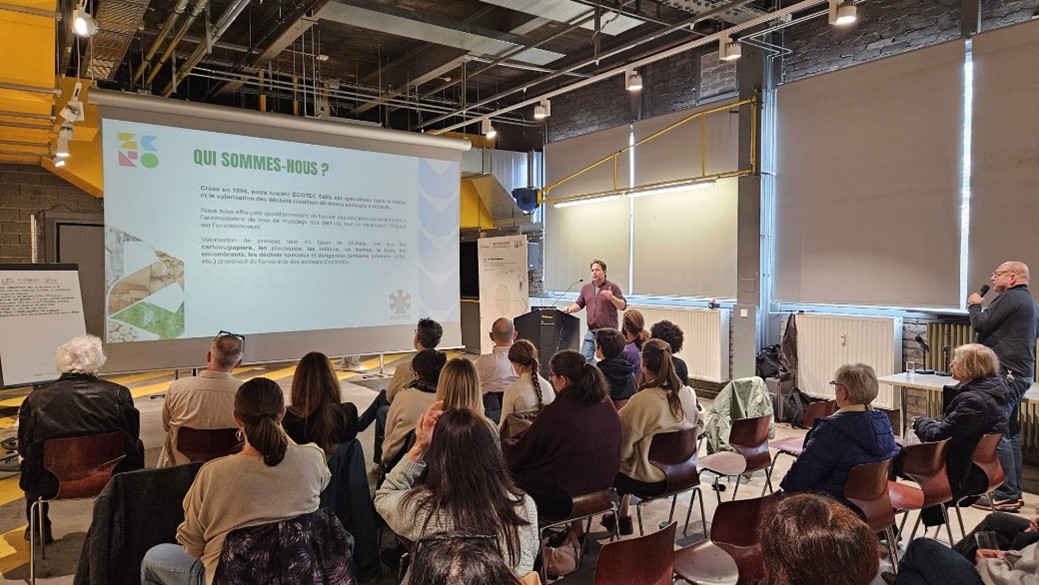
Image: Co-creation in action - Community members contribute ideas for the school’s evolving green spaces.
A Model for Community-Led Transformation
The Differdange Green Hub is becoming an example of how climate adaptation can succeed when citizens are invited to help lead the change. Early engagement is already creating a sense of ownership, which is essential for the long-term care and maintenance of green infrastructure.
As the project progresses, the municipality and school community will continue working side by side to develop more detailed designs, expand student involvement, and roll out new green features across the site.