Plans for three Cool Neighbourhoods pilots in Goes have been completed, bringing Zusterstraat, Bastion and City Hall closer to implementation during 2026.
The Municipality of Goes is preparing to move its Grey to Green ambitions from design into delivery. The three pilot locations address different urban settings, but share a common purpose: reducing heat stress, introducing more greenery and biodiversity, improving water management and making public spaces more attractive and liveable.
Responding to heat in a densely built city
Goes faces growing pressure from hotter summers and more extreme weather. In the inner city, hard surfaces, limited planting and a shortage of shade contribute to heat stress. The wider pilot framework aims to green 500 m² of public space and test practical nature-based solutions that can be adapted to the physical constraints of a historic and densely built environment.
The earlier analysis identified both the need and the challenge. Greening can reduce the urban heat island effect, support biodiversity, improve air quality and help manage rainwater. At the same time, underground cables and pipes, listed buildings, ownership questions and rising construction costs require careful preparation. The current design and procurement work is therefore an essential part of turning climate objectives into deliverable projects.
Three locations moving forward
The designs for Zusterstraat, Bastion and City Hall have now been completed. Each location provides an opportunity to show how greening can be integrated into an existing urban setting rather than treated as a separate or purely decorative intervention.
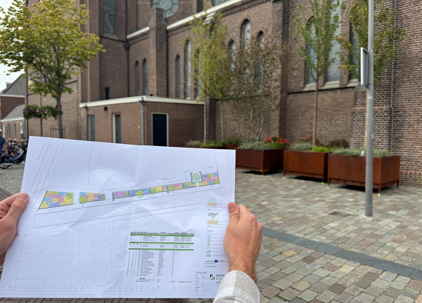 The planting design for Zusterstraat shown at the pilot
location. Image: Municipality of Goes / Cool Neighbourhoods.
The planting design for Zusterstraat shown at the pilot
location. Image: Municipality of Goes / Cool Neighbourhoods.
At Zusterstraat, preparations are continuing for the proposed green façade and the wider design of the area. The location illustrates the potential to introduce planting in a compact inner-city street where space is limited and existing buildings and infrastructure must be taken fully into account. The design phase has helped translate the broad ambition of a cooler and greener street into an approach that can now move towards procurement and implementation.
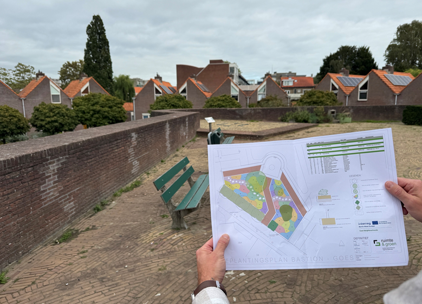 The completed planting design for the Bastion pilot is
considered on site. Image: Municipality of Goes / Cool Neighbourhoods.
The completed planting design for the Bastion pilot is
considered on site. Image: Municipality of Goes / Cool Neighbourhoods.
At Bastion, the completed design provides the basis for transforming the site through additional planting and a more climate-adaptive use of the available space. The pilot will demonstrate how an established urban area can be reconsidered to provide greater environmental and social value, while respecting the character and practical constraints of the location.
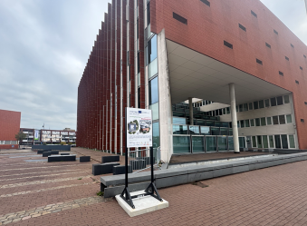 City Hall is one of the three Goes pilot locations now
progressing towards implementation. Image: Municipality of Goes / Cool
Neighbourhoods.
City Hall is one of the three Goes pilot locations now
progressing towards implementation. Image: Municipality of Goes / Cool
Neighbourhoods.
At City Hall, preparations for further greening are also progressing. The largely paved surroundings experience heat stress during hot summer periods. Earlier planning explored vertical and horizontal greening, improved rainwater management and water storage for planting. The site also allows the municipality to lead by example by making its own property more climate-adaptive and creating a more comfortable setting for employees, visitors, residents and nearby businesses.
Technical investigations support delivery
Moving from a design on paper to construction on site requires a clear understanding of what lies above and below ground. Trial trenches and technical investigations have therefore been completed at the pilot locations, and the findings are being incorporated into the final preparations.
This work is particularly important in areas where cables, pipes, building structures or difficult soil conditions may affect what can be planted and how greening systems can be installed. At City Hall, for example, the existing structure creates technical considerations for façade greening, while water management and saline soil conditions must also be addressed. Identifying these issues before procurement reduces uncertainty and helps ensure that the tendered measures are realistic and maintainable.
The tender documents are currently being finalised. This is the key step between design and delivery: it converts the agreed plans and technical findings into a clear basis on which contractors can price and undertake the work.
Working with residents across Goes
Physical improvements are only one part of creating cooler neighbourhoods. In October 2026, neighbourhood visits will take place in several areas of Goes together with students from HZ University of Applied Sciences. These visits will collect information about the sustainability of homes and gardens and will help build a clearer picture of the opportunities and barriers residents face.
The visits will also raise awareness of practical measures that people can take in their own homes and outdoor spaces. This matters because the benefits of municipal greening can be strengthened when residents, businesses and property owners also contribute. Clear and accessible communication can help connect the three visible pilots with wider action across the city and encourage people to see climate adaptation as a shared and achievable process.
The next milestone
The Goes pilots are now approaching the transition from design and preparation to implementation. Work is planned to begin during 2026, although the precise timing will depend on contractor availability following the procurement process.
Once implementation begins, the three locations will provide visible examples of how a municipality can respond to heat stress and limited urban space through carefully planned greening. They will also generate practical experience of technical delivery, maintenance, resident engagement and the coordination required across municipal departments.
Further updates, photographs and results will be shared as Zusterstraat,
Bastion and City Hall move into implementation and the plans begin to change
the city from grey to green.