As part of the Cool Neighbourhoods project, the Province of Antwerp is taking decisive steps to adapt its educational campus at PIVA (Provinciaal Instituut voor Voedingsbedrijven Antwerpen) to the realities of a changing climate. Situated between a green provincial zone and the Antwerp Ring Road, the site currently experiences significant urban heat stress due to limited vegetation and impermeable surfaces. The new pilot is set to transform this environment — making it more resilient, liveable, and educational.
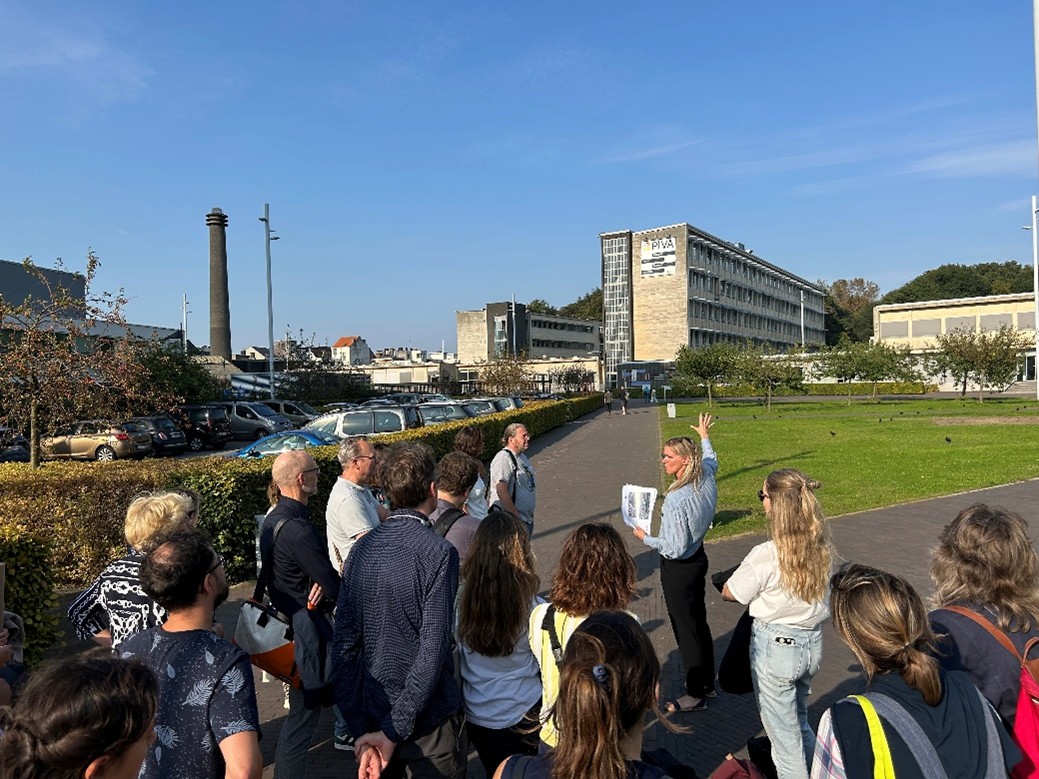
The Cool Neighbourhoods partnership observing the pilot site.
The Challenge
The PIVA site faces three major constraints:
- Rising construction costs, making large-scale interventions harder to fund.
- Governance complexity, as the campus is provincially managed but sits within the urban area of Antwerp.
- Severe heat stress, driven by a lack of green infrastructure and permeable surfaces.
These challenges are not unique — many school environments across North-West Europe struggle with similar issues, particularly in areas with overlapping governance and growing urban heat islands.
The Opportunity
Despite these hurdles, the PIVA pilot represents a major opportunity to test cost-effective, high-impact nature-based solutions:
- Green facades and living walls to cool classrooms and improve air quality.
- Permeable paving to reduce flooding and surface heat.
- Small-scale urban forests and edible gardens to boost biodiversity, shade, and educational value.
The pilot is a central part of Antwerp’s broader climate neutrality goals and will contribute directly to the Cool Neighbourhoods Liveability Index — tracking improvements in climate resilience and quality of life.
Engaging Students and Staff
What makes this pilot especially unique is its focus on education and participation. Students, teachers, and staff will be engaged at every stage — from planning and planting to maintenance and monitoring. This not only builds climate awareness but also strengthens long-term stewardship of the site’s green assets.

What’s Next?
- Finalisation of design and permitting in late 2025
- Construction and planting to begin in early 2026
- Integration of green space use into school curricula
- Regular monitoring of cooling effects and biodiversity impact
By embedding sustainability into the core of daily school life, the PIVA pilot sets a powerful example for other educational institutions across the Interreg North-West Europe region.
Stay tuned for updates as PIVA transitions from grey to green — one of many Cool Neighbourhoods making a difference for future generations.