From Grey to Green: Turning Knowledge into Action
This article forms part of the “From Grey to Green: Turning Knowledge into Action” series, developed following the Cool Neighbourhoods Mid-Term Conference (12th March 2026, Middelburg, Netherlands).
The insights presented here are based on contributions delivered during the conference by:
Eva Gheselle – City of Bruges (Belgium), GreenDense Project.
Eva is actively involved in the GreenDense Interreg North West Europe project https://greendense.nweurope.eu/ , which focuses on scaling Nature-Based Solutions (NbS) across urban environments, particularly in dense and historic cities where space constraints present significant challenges.
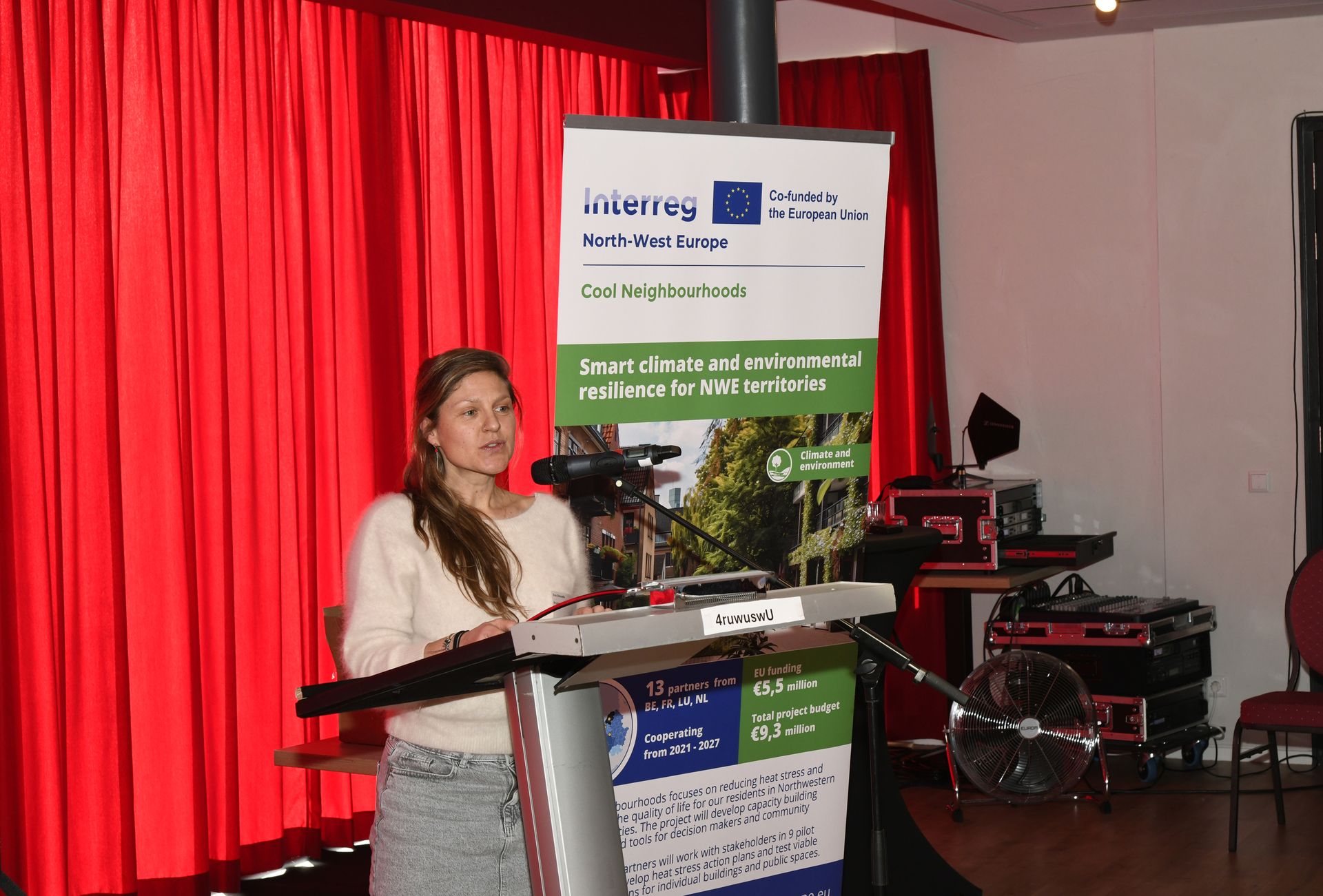
Image: Eva Gheselle presenting at the Mid-Term event.
Urban Challenges in Bruges
Bruges is often seen as a green and liveable city. However, like many European cities, it is facing increasing pressures linked to climate change and urban development.
Key challenges include:
- Urban heat island effects
- Urban flooding
- Increasing levels of paved and sealed surfaces
Over time, the growth of impermeable surfaces has reduced the city’s ability to absorb water and regulate temperature, making neighbourhoods more vulnerable to both heat and heavy rainfall.
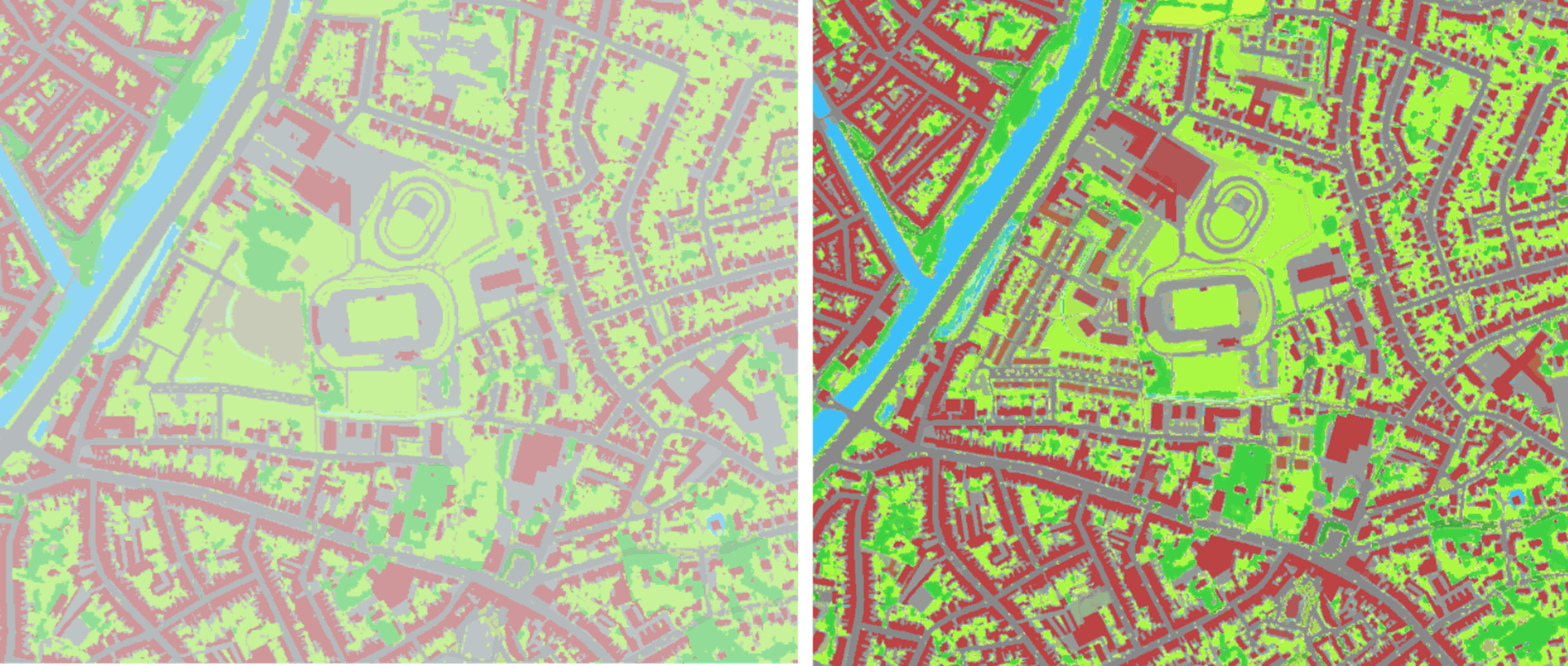
Image: Bruges context, urban challenges and pavement evolution
A Real-World Pilot: Matmeers – Tramstraat
To address these challenges, the GreenDense approach has been applied in a specific pilot area:
👉 Matmeers – Tramstraat in Bruges
This neighbourhood represents a typical dense urban setting, where space is limited and interventions must be carefully designed to serve multiple functions.
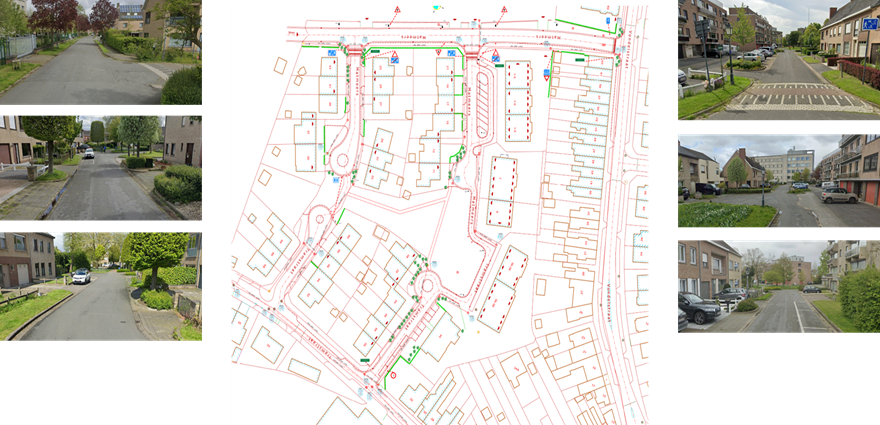
Image: Pilot area Matmeers – Tramstraat
Introducing the GreenDense Approach
At the heart of the presentation is the GreenDense Pattern Atlas, a tool designed to translate climate adaptation concepts into practical interventions.
Rather than focusing on single solutions, GreenDense introduces a “mosaic pattern approach”.
This means:
👉 Multiple interventions are combined within the same space
👉 Each intervention serves more than one purpose
This approach allows cities to make the most of limited urban space while addressing multiple challenges at once.
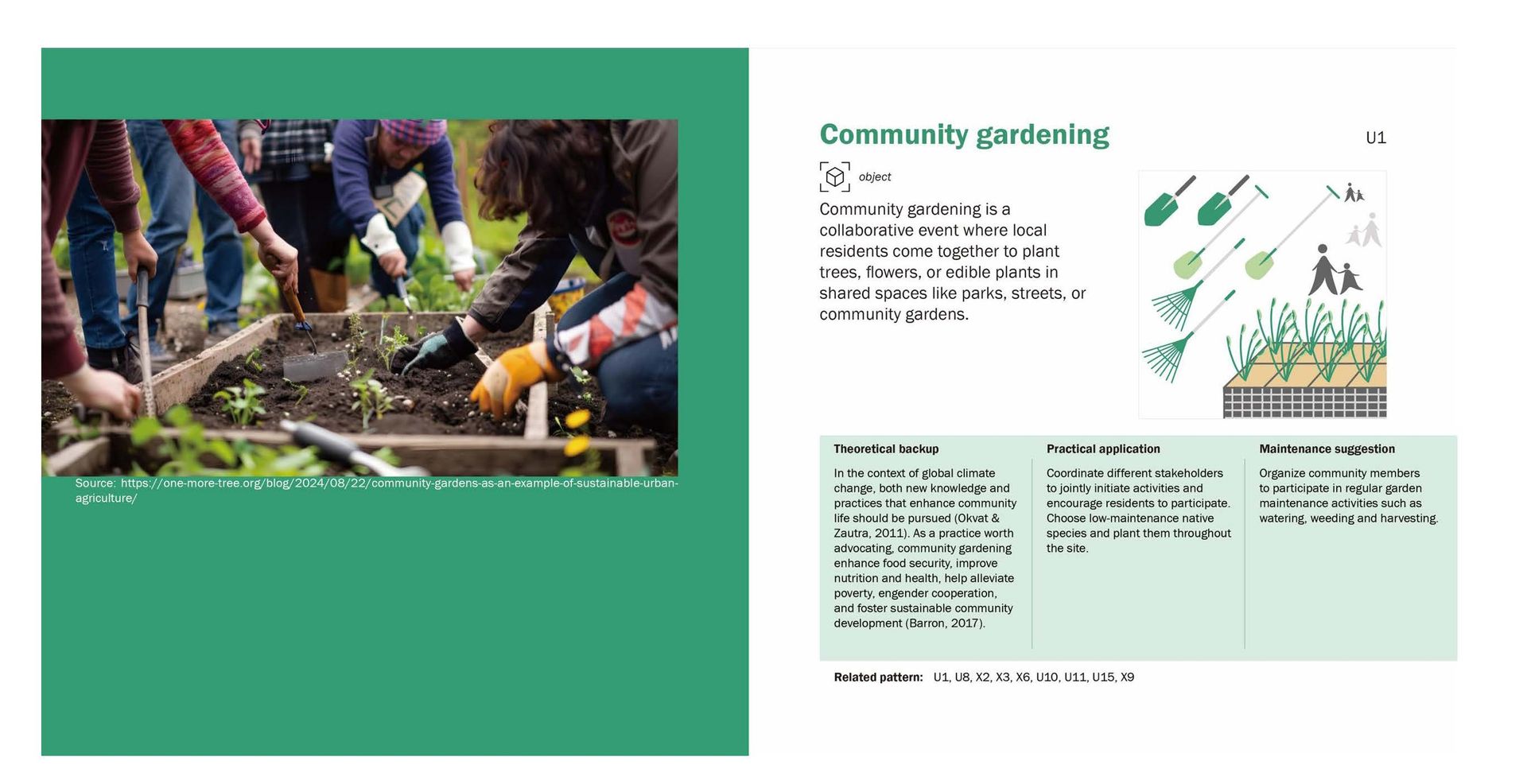
Image: Mosaic pattern approach
Understanding Urban Space Through Typologies
To support this approach, the project uses urban space typologies.
These typologies help to:
- Understand how different parts of the city function
- Identify what type of intervention is most suitable
- Apply solutions in a structured and location-specific way
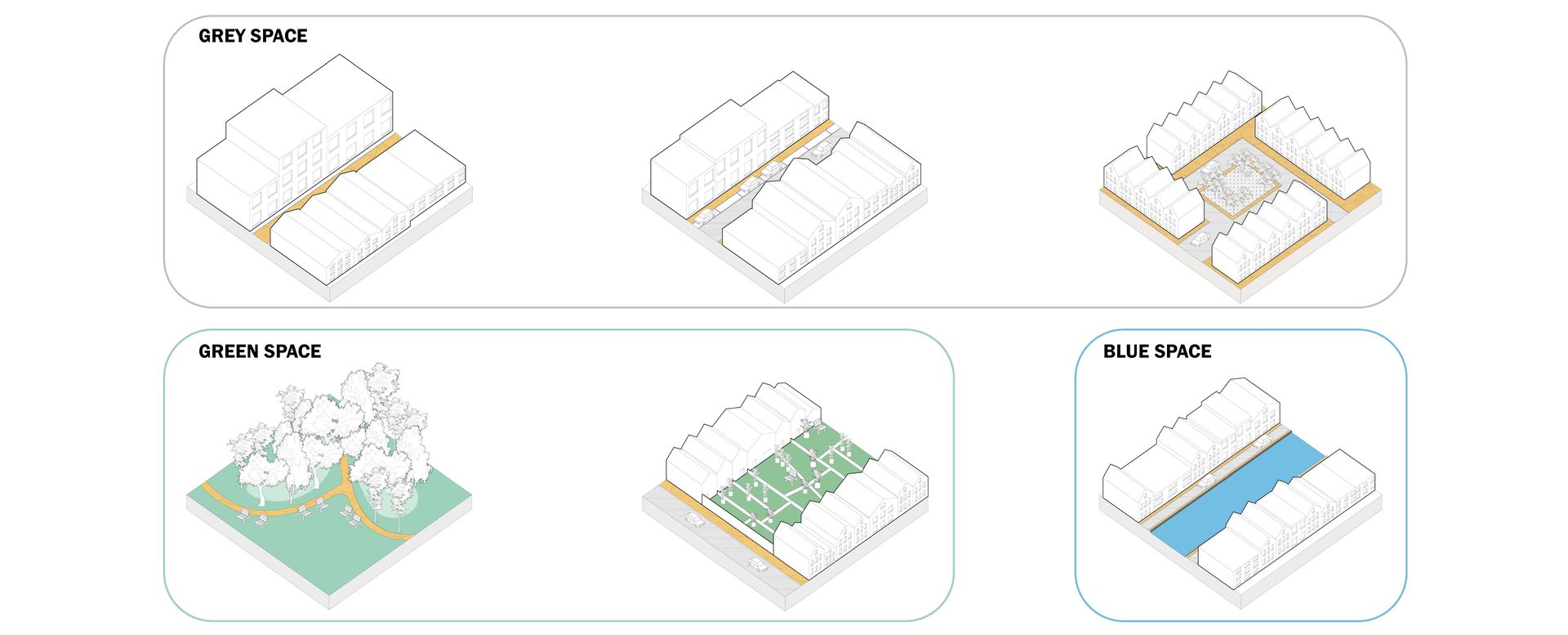
Image: Bruges urban space typologies
Four Key Areas of Intervention
The GreenDense Pattern Atlas identifies four main areas where interventions can be applied:
1. Depavement and Permeable Surfaces
Reducing sealed surfaces and introducing permeable materials to improve water infiltration and create space for greenery.
2. Connecting Green Spaces
Increasing greenery through trees, small green areas, and connected planting, helping to improve cooling and biodiversity.
3. Integrating Mobility and Green Design
Balancing parking, safety, and green infrastructure, including shared mobility solutions and improved road layouts.
4. Natural Play and Water Integration
Creating spaces that combine recreation with climate adaptation, particularly through water management and natural play environments.
Working with Communities
A key part of the GreenDense approach is the involvement of local residents.
The participation process included:
- Gathering input at neighbourhood level
- Identifying shared priorities
- Building a collective vision for the future
This resulted in:
- Stronger community ownership
- Clear priorities (such as more green space and safer environments)
- Increased support for proposed interventions
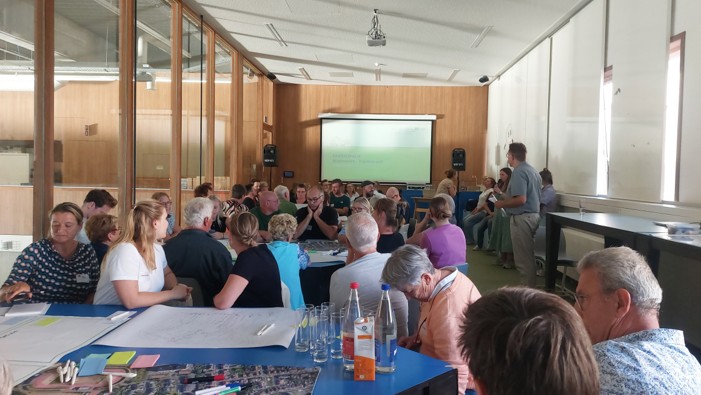
Image: Participation process and outcomes
Planning for Different Levels of Change
The GreenDense approach also recognises that cities have different levels of ambition and capacity.
To address this, interventions are structured across three levels:
- Ready for today (low impact)
- Ready for tomorrow (medium impact)
- Ready for the future (high impact)
This allows cities to take a phased approach to implementation.
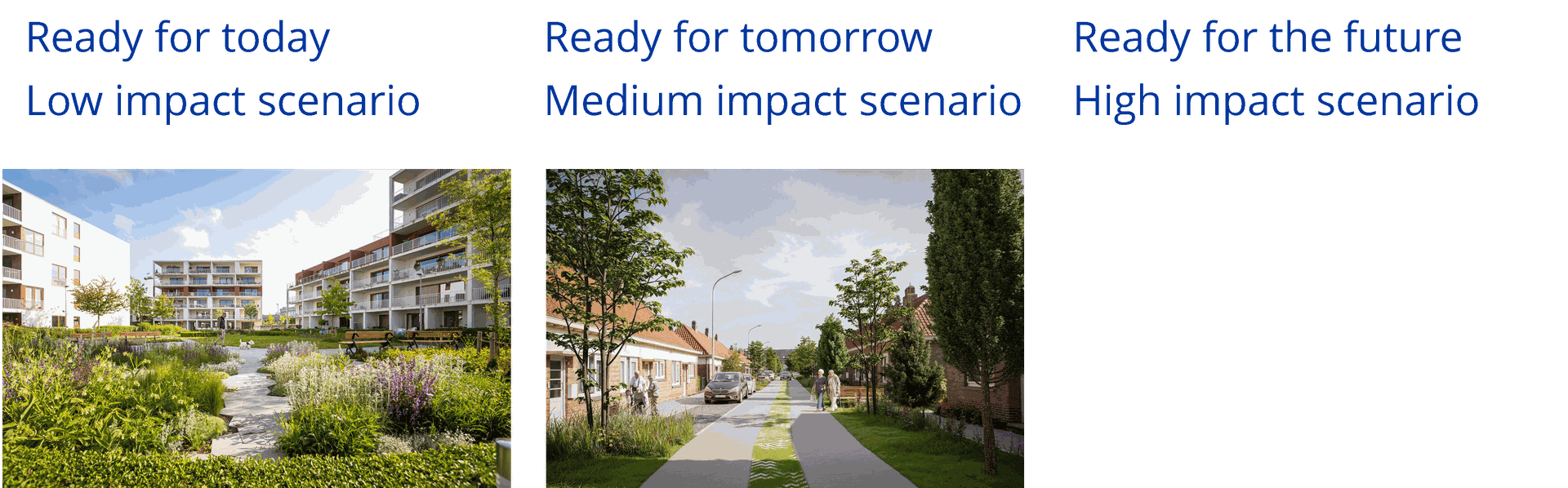
Image: Three levels of change
From Concept to Implementation
In the Bruges pilot, the GreenDense patterns have already been applied in practice.
Interventions include:
- Depaving
- Tree planting
- Creation of small green spaces
- Water buffering solutions
These changes demonstrate how combining different measures can improve both environmental performance and the usability of public space.
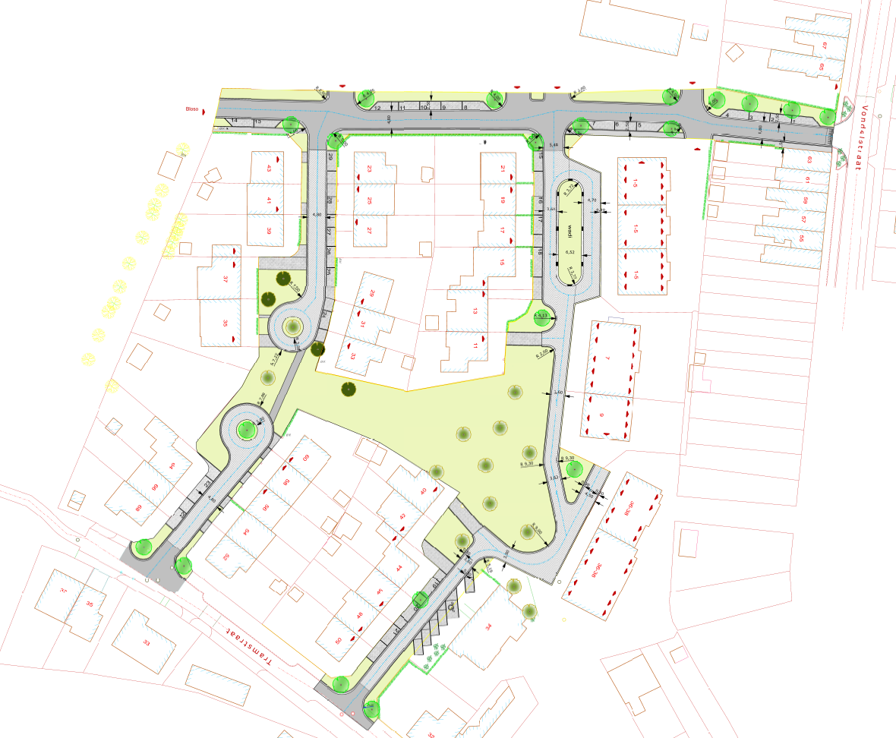
Image: Redesigned Matmeers–Tramstraat / implementation visuals
A Practical and Scalable Approach
One of the key outcomes of the presentation is that the GreenDense approach is not limited to Bruges.
The Pattern Atlas provides a practical framework that can be adapted by other cities and neighbourhoods.
It shows how:
- Climate adaptation can be integrated into everyday urban design
- Small-scale interventions can be combined effectively
- Solutions can be applied even in space-constrained environments
Conclusion
The GreenDense presentation provides a clear example of how cities can move:
👉 From theory → to practical implementation
By combining:
- Structured design approaches
- Multiple intervention types
- Community involvement
Cities can begin to transform urban spaces in a way that addresses heat, water, and liveability challenges together.
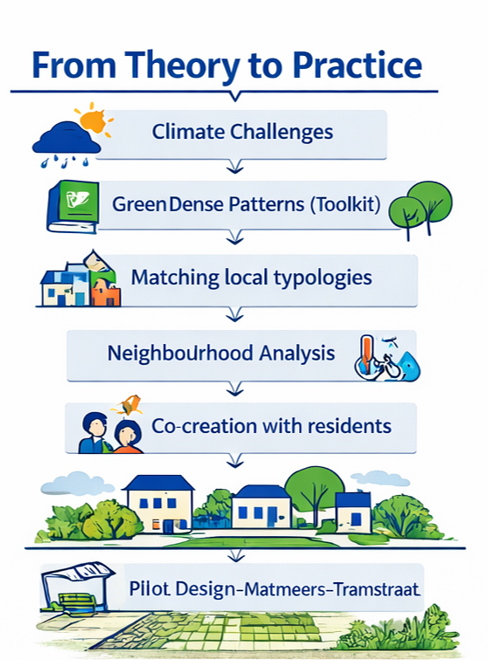
Image: Theory to practice
What Comes Next
This article is part of a wider series exploring key insights from the Cool Neighbourhoods Mid-Term Conference.
Next in the series:
👉 Dr Tim van Hattum – Wageningen University & Research
Climate Futures: Scenario Planning for Resilient Cities