Introduction
Recently, partners of the Cool Neighbourhoods project visited the Joint Research Centre Zeeland (JRCZ) for a dedicated knowledge exchange session focused on climate monitoring, digital innovation, and heat adaptation strategies.
The visit highlighted how data, digital tools, citizen science, and spatial analysis are increasingly supporting evidence-based approaches to climate adaptation and urban resilience.
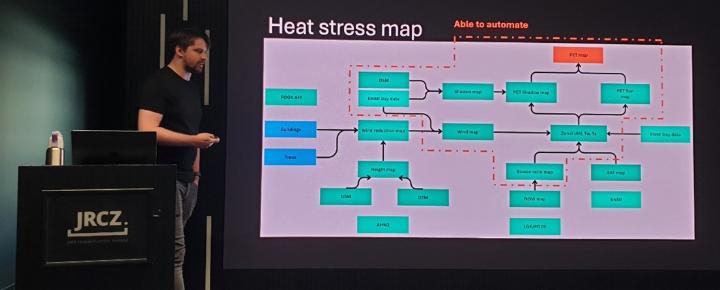 IMAGE: Tim
Kardol / JRCZ session
IMAGE: Tim
Kardol / JRCZ session
Tim Kardol, HZ University of Applied Sciences, presenting the development of
the Digital Twin approach for Zeeland.
From Data to Decision-Making
A central theme throughout the session was the increasing importance of evidence-based monitoring in shaping effective climate adaptation strategies.
Partners were introduced to measurement results from Summer 2025, demonstrating how neighbourhood-level climate data can be translated into actionable insights for municipalities and urban stakeholders.
The session reinforced an important message:
👉 Data alone is not enough — its value lies in how it supports practical implementation, decision-making, and long-term urban resilience.
Digital Innovation: Building and Scaling the Digital Twin Approach
One of the key highlights of the day was the presentation by representatives of HZ University of Applied Sciences on the continued development of the Zeeland Digital Twin environment.
The Digital Twin concept provides a real-time, interactive 3D representation of urban environments, enabling stakeholders to better understand the relationship between heat stress, urban form, vegetation, water, and public space.
Importantly, the work presented demonstrated how digital tools are evolving beyond visualisation alone towards becoming practical decision-support instruments for municipalities and regional authorities.
The approach also illustrates significant potential for:
• Scenario testing and
simulation
• Monitoring intervention effectiveness
• Supporting Neighbourhood Heat Stress Action Plans (NHSAPs)
• Enhancing stakeholder communication and participation
• Scaling knowledge transfer across regions
As climate adaptation challenges intensify across Europe, scalable digital approaches such as these are expected to play an increasingly important role in supporting cities and regions in evidence-based adaptation planning.
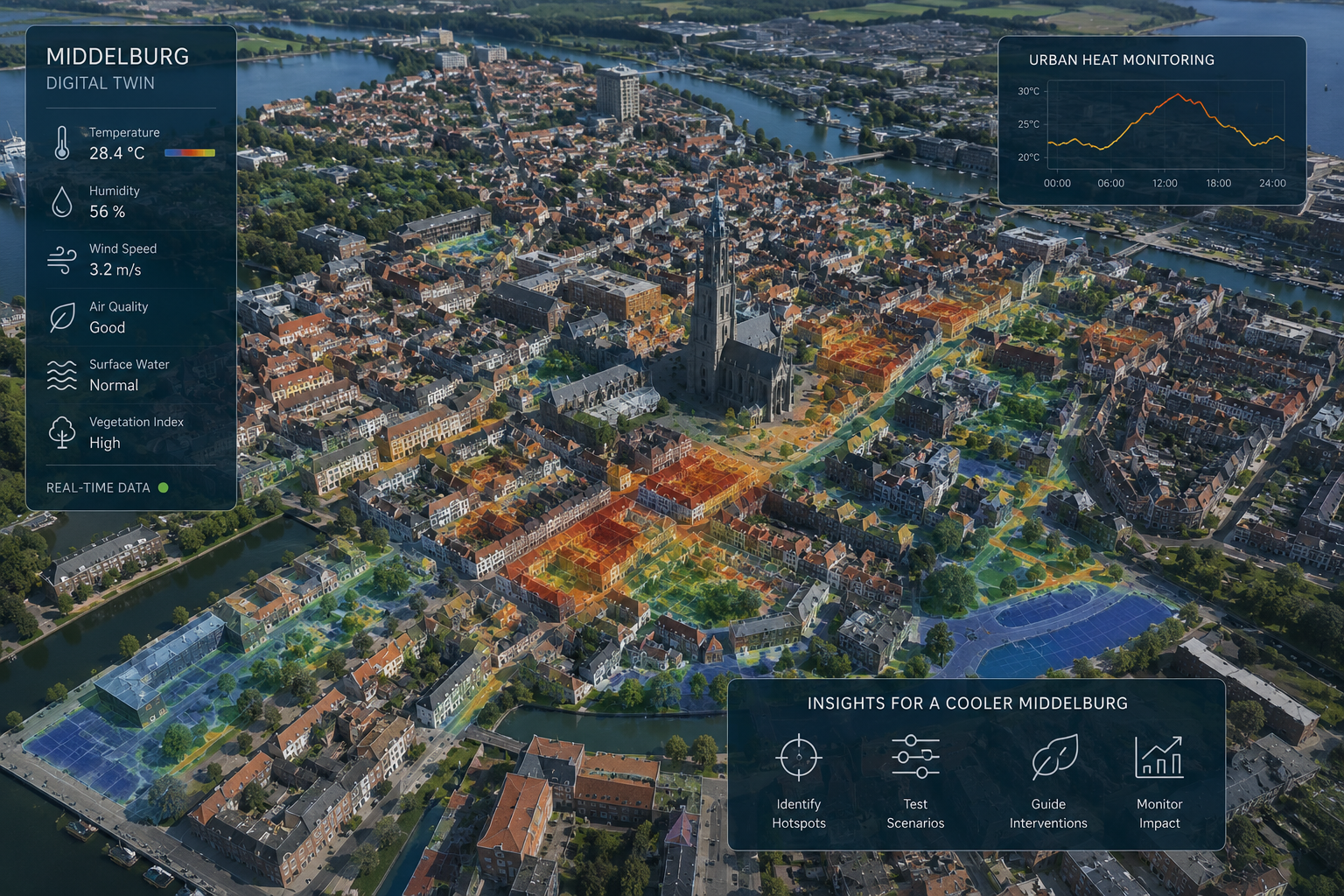 IMAGE: 1 Building and Scaling the Digital Twin Approach
A Digital Twin-style visualisation showing how urban data can support heat
adaptation, scenario testing and evidence-based planning.
Citizen Science: Measuring Heat Where It Is Experienced
The session also highlighted findings from the Edelstenenbuurt pilot, demonstrating how citizen science contributes valuable local insight to the broader monitoring framework.
By combining sensor-based measurement with community engagement, the project strengthens both the quality of the data and the connection between residents and climate adaptation actions.
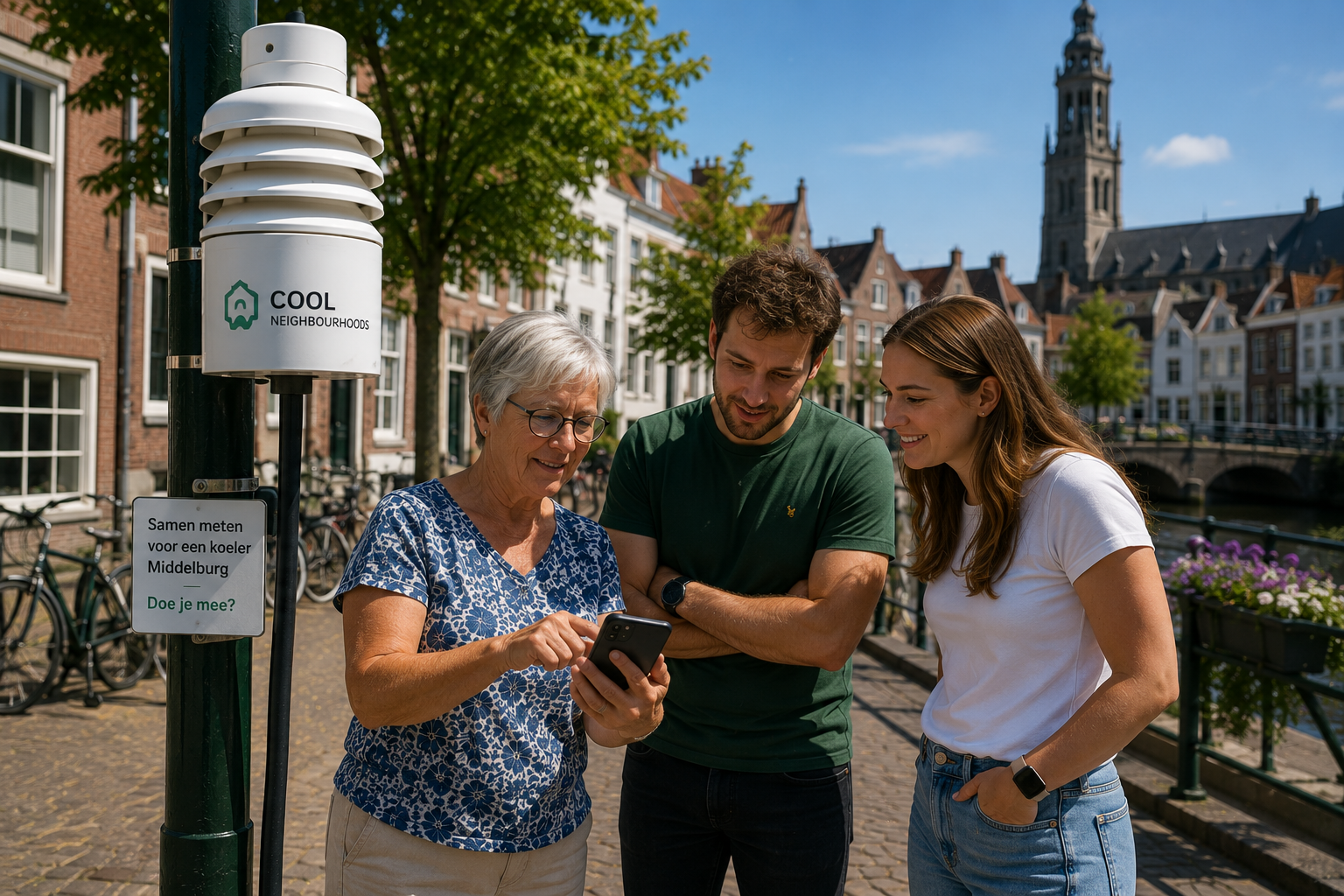 IMAGE: 2 Citizen Science Middelburg
Citizen science approaches help connect local experience with climate data,
supporting more responsive and community-based adaptation planning.
Spatial Analysis and Urban Form
Further presentations explored how urban structure directly influences heat accumulation.
Research findings presented during the session demonstrated how land surface temperature is shaped by factors including:
• Building density
• Surface materials
• Vegetation cover
• Spatial configuration
This reinforces the need to move beyond generic greening approaches towards targeted, evidence-based interventions that can be adapted to different urban contexts.
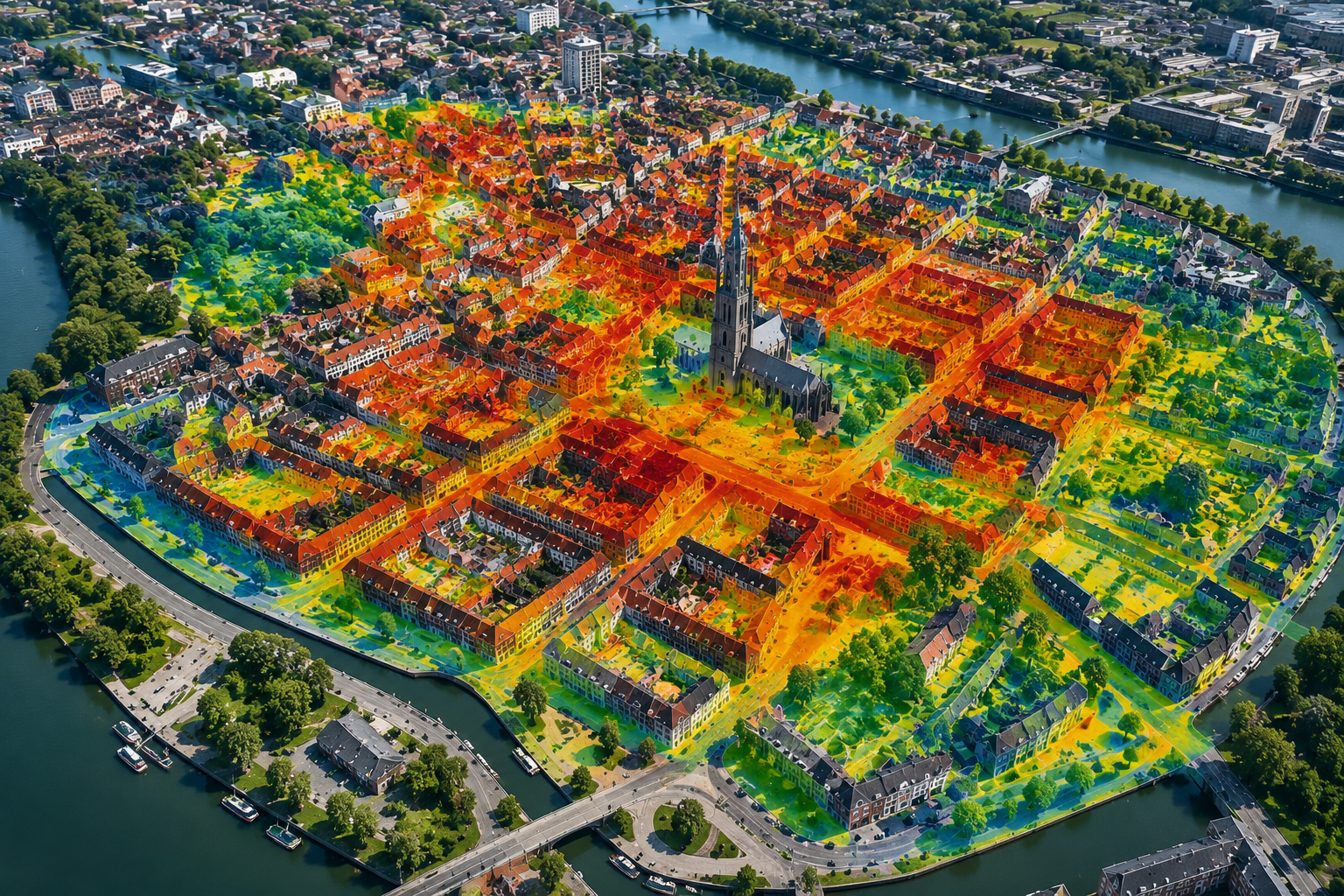 IMAGE: 3 Spatial Analysis Heat Mapping
Spatial analysis and heat mapping help identify where heat accumulates and
where targeted interventions can have the greatest impact.
Bridging Research, Technology, and Implementation
The session clearly demonstrated the strength of the Cool Neighbourhoods methodology — integrating:
• Measurement
• Spatial analysis
• Digital simulation
• Citizen engagement
• Practical implementation
Together, these elements create a strong foundation for scaling knowledge, tools, and approaches across North-West Europe and beyond.

IMAGE: 4 Bridging Research, Technology and Implementation
Collaboration between municipalities, knowledge institutions, technology
partners and communities is central to turning data into practical climate
adaptation action.
Looking Ahead
Through continued collaboration, innovation, and knowledge exchange, Cool Neighbourhoods is helping municipalities transform climate data into practical action and long-term impact.
The work presented at JRCZ also highlighted how existing project outputs and digital innovations can continue evolving beyond individual pilots — supporting wider adoption, capacity-building, and replication across other European regions.
Further comprehensive articles on the presentations and methodologies discussed during the session will be published on the Cool Neighbourhoods website in the coming weeks.
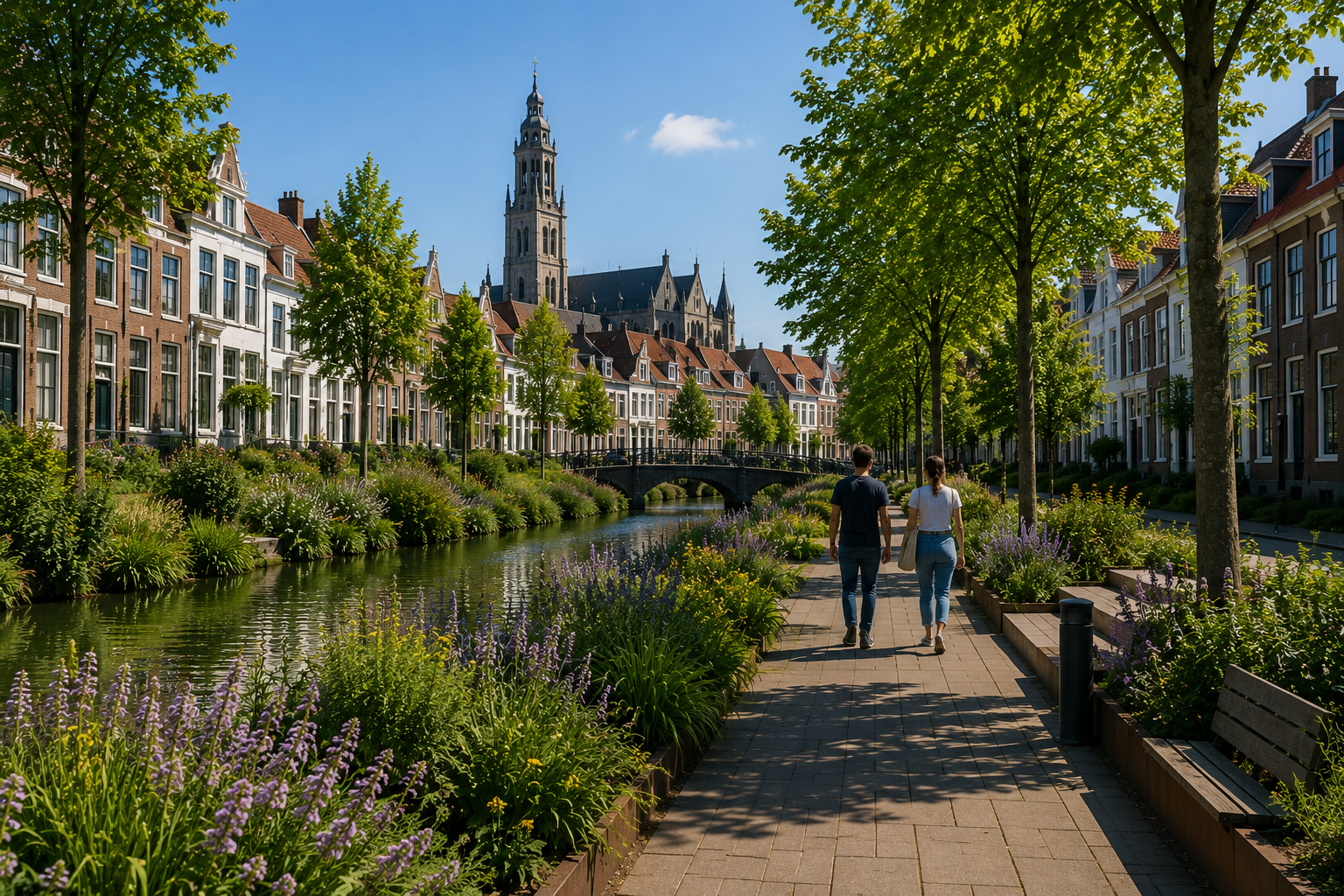 IMAGE: 5 Grey to Green -
Scaling Impact for a Cooler Future
IMAGE: 5 Grey to Green -
Scaling Impact for a Cooler Future
From Grey to Green, Cool Neighbourhoods demonstrates how digital insight,
local action and European cooperation can support cooler, healthier and more
liveable places.
Conclusion
The JRCZ session demonstrated that the future of climate adaptation lies not only in collecting data, but in transforming knowledge into scalable action.
By combining digital innovation, citizen engagement, and practical implementation, Cool Neighbourhoods continues to support cities and regions in moving from Grey to Green — creating healthier, more resilient, and more liveable urban environments across Europe.