How can European cities and communities turn knowledge about urban heat into practical action? Cool Neighbourhoods Newsletter #5 brings together project insights, shared learning and new resources that show how collaboration can support cooler, greener and more liveable neighbourhoods.
The latest edition looks back at the Cool Neighbourhoods Mid-Term Conference, held in Middelburg on the 12th March 2026. More than 130 participants from across Europe came together to exchange experience and explore how local climate adaptation can move from evidence and ideas to implementation. The result is a newsletter shaped around a simple but important message: good practice creates greater value when it is shared.
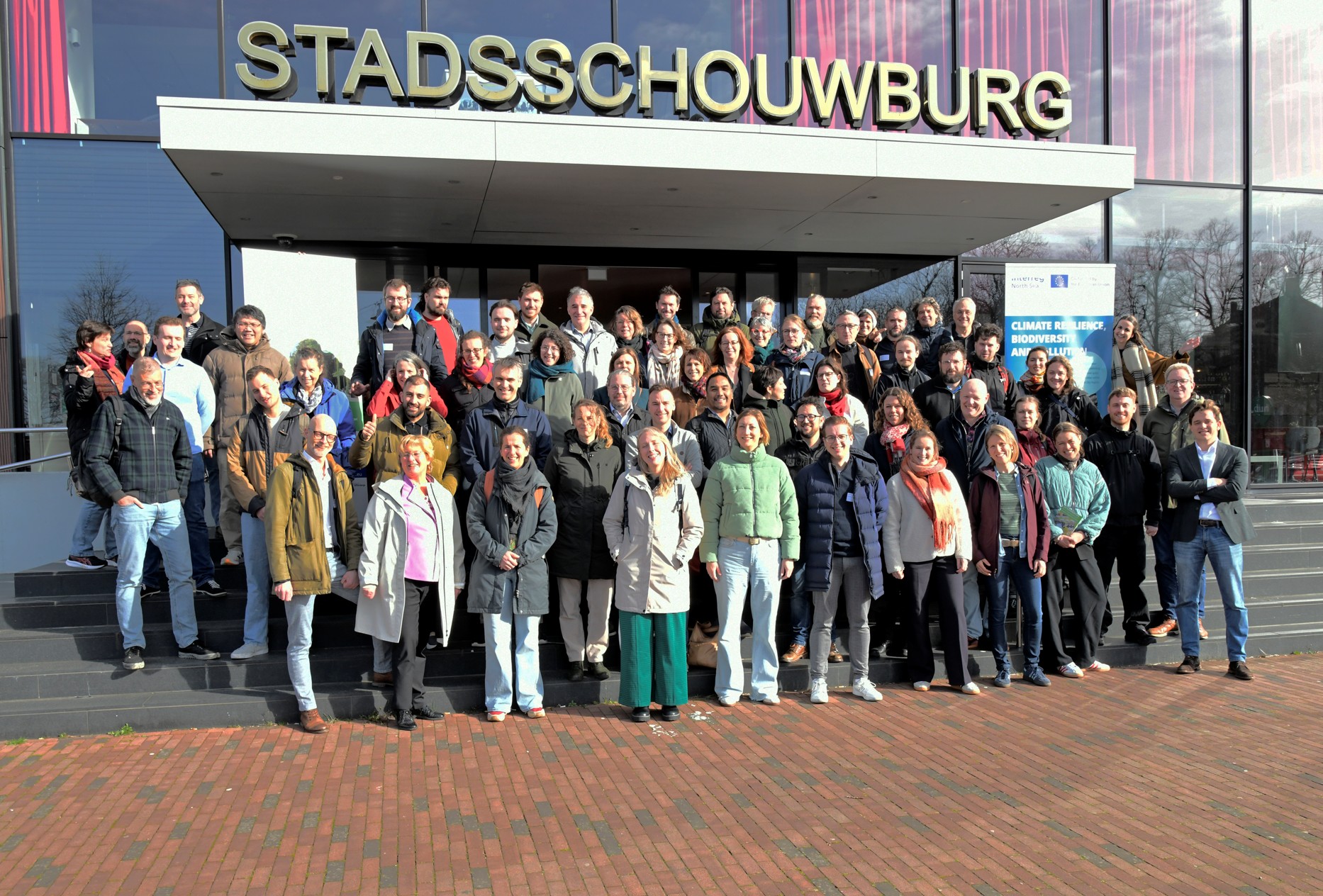
Cool Neighbourhoods and Cool Cities partners at the joint Mid-Term Conference in Middelburg, where European projects exchanged knowledge on urban heat and liveability.
For municipalities, practitioners and policymakers, Newsletter #5 offers an accessible overview of approaches that connect climate resilience with public health, social inclusion and better everyday places. For researchers, it shows how knowledge about heat, urban form and local conditions can inform decisions. For communities, it demonstrates why residents' experience and participation matter when neighbourhood solutions are designed and delivered.
European collaboration that helps ideas travel
A central theme of this edition is the power of European collaboration. The Mid-Term Conference created a platform for Cool Neighbourhoods to exchange knowledge with Cool Cities, GreenDense, Polliconnect, Interreg North-West Europe and the Interreg North Sea Region. More than 30 project posters added to that exchange, connecting multiple projects around a shared ambition.
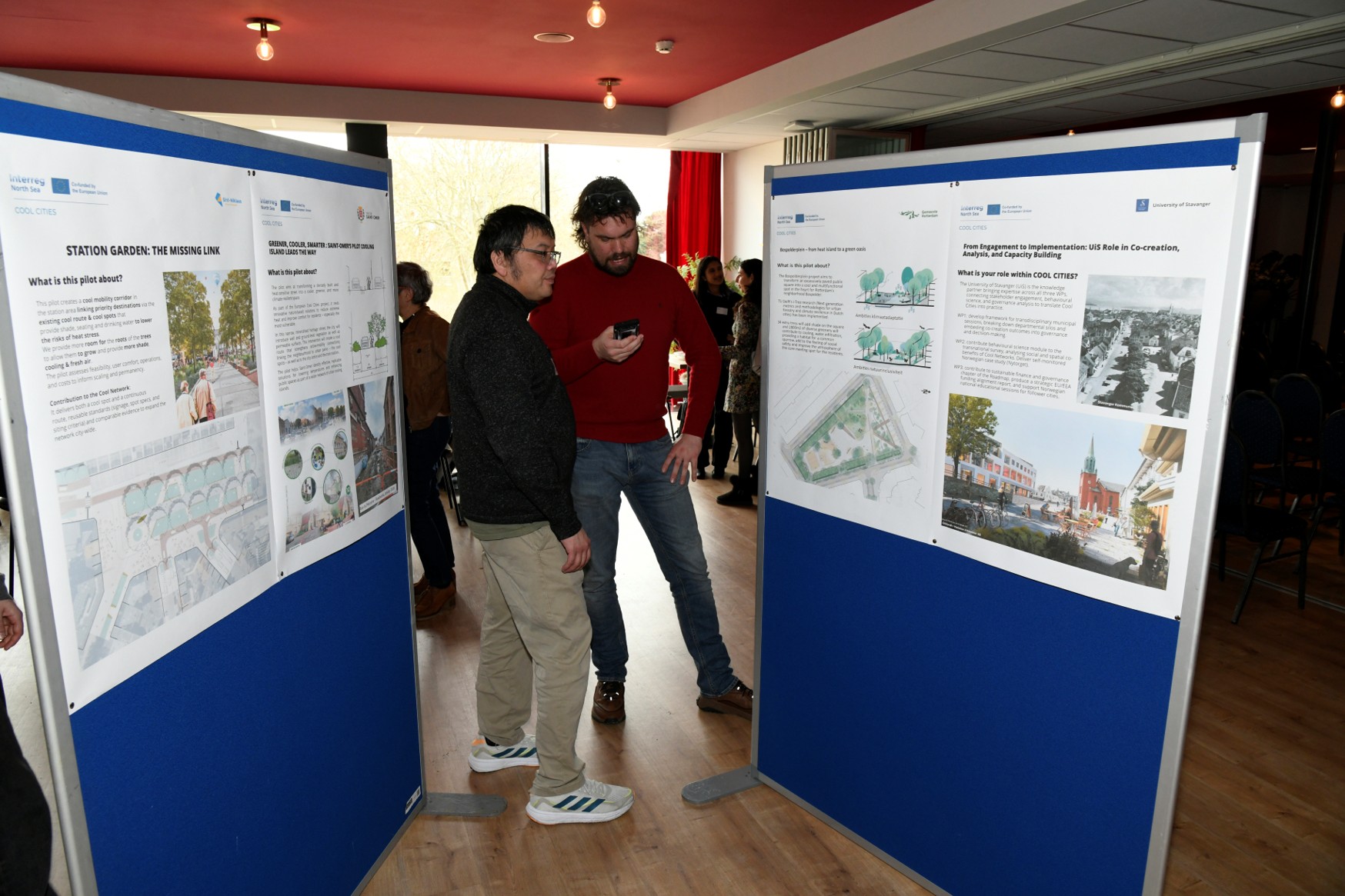
Project posters created a practical forum for comparing local approaches and sharing learning across European programmes.
These connections matter because climate challenges do not stop at municipal or national borders. By comparing approaches and discussing what works in different places, partners can help practical learning travel beyond an individual pilot area. The newsletter shows how collaboration and capitalisation can support the wider adoption of successful local solutions, creating benefits across regions.
This is European cooperation in a practical form: projects learning from one another, communities contributing local insight, and organisations working together to create cooler, greener and more liveable places.
Greener streets, fairer adaptation and healthier communities
Newsletter #5 also explores how the physical design of neighbourhoods affects both climate resilience and quality of life. Green streets can help create safer, cooler and more attractive places while supporting wellbeing, strengthening social connections and improving residents' everyday experience.
Nature-based solutions are an important part of this picture. Trees, planting schemes and other green infrastructure can help cities respond to rising temperatures while contributing to biodiversity and neighbourhood liveability. Experience shared through GreenDense illustrates how working with nature can generate several benefits at the same time, rather than treating heat adaptation as a single-purpose intervention.

Partners explore a living green wall, illustrating how nature-based solutions can support cooler, more liveable places.
The edition also draws attention to fairness. Heat exposure and vulnerability are not distributed evenly, and some neighbourhoods face greater risks than others. Planning equitable cool networks therefore depends on understanding where heat is most severe and ensuring that support reaches the communities that need it most.
Evidence, participation and capacity building
Practical climate action needs both reliable evidence and local knowledge. The newsletter highlights research in Middelburg into how buildings, public spaces, vegetation and urban design influence local temperatures. It also shows citizen science in practice, with residents helping to collect neighbourhood-level temperature data through sensors installed in streets, public spaces and homes.
Alongside measurement, co-creation is presented as essential to lasting change. When residents help shape responses, solutions can better reflect local priorities and experience. This can make climate adaptation more practical, more inclusive and more likely to deliver benefits over time.
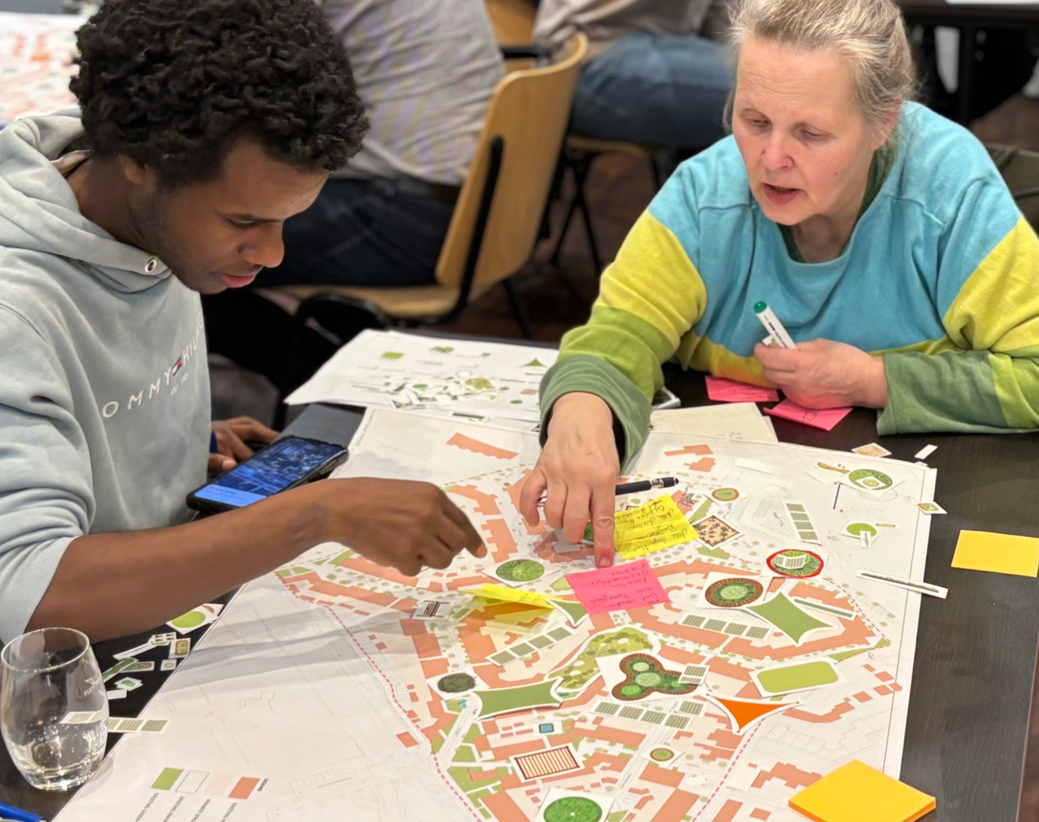
Co-creation in practice: local knowledge and lived experience help shape neighbourhood-scale climate adaptation.
Capacity building connects these strands. The newsletter's coverage of The Heat Is On and work at JRC Zeeland shows how research, digital technologies and climate monitoring can support stronger decisions and climate resilience. For municipal teams and practitioners, this combination of data, learning and knowledge exchange provides a clearer route from understanding heat stress to acting on it.

Heat-stress mapping demonstrates how research and digital evidence can strengthen local climate decisions and municipal capacity.
A new home for practical project resources
Newsletter #5 introduces the new Published Key Documents section, created to share the tools, frameworks and knowledge developed through Cool Neighbourhoods.
Its first featured resource is the Empowerment Process Guidebook. The guidebook provides municipalities with a practical framework for engaging citizens, stakeholders and local communities in neighbourhood-scale climate adaptation. It supports participation, collaboration and co-creation, helping turn local knowledge into meaningful climate action.

The Empowerment Process Guidebook turns partnership learning into a practical resource for citizen engagement, capacity building and co-creation.
Together, the stories and resources in this edition demonstrate the value created by the partnership: evidence is connected with experience, ideas are tested through collaboration, and learning is shared so that others can use it.
Read Newsletter #5 and Explore Published Key Documents
Newsletters, reports, guidebooks and other practical project resources developed by the partnership are brought together. To receive future editions directly and stay connected with Cool Neighbourhoods, subscribe to the newsletter.