Introduction
As the Cool Neighbourhoods Mid-Term Conference (12 March 2026, Middelburg, Netherlands) concluded, the focus shifted from individual project insights to a broader and more strategic perspective:
👉 How can the results of projects such as Cool Neighbourhoods be scaled across Europe?
Representatives from the Joint Secretariats of Interreg North-West Europe and the North Sea Region provided valuable insight into the future of European cooperation — highlighting how collaboration, capitalisation, and knowledge transfer are central to achieving lasting impact.
A Shared European Landscape of Action
The presentation illustrated the extensive reach of Interreg projects across Europe, with initiatives such as:
- Cool Neighbourhoods
- Cool Cities
- GreenDense
- Ready4Heat
All operating across multiple countries and urban contexts.
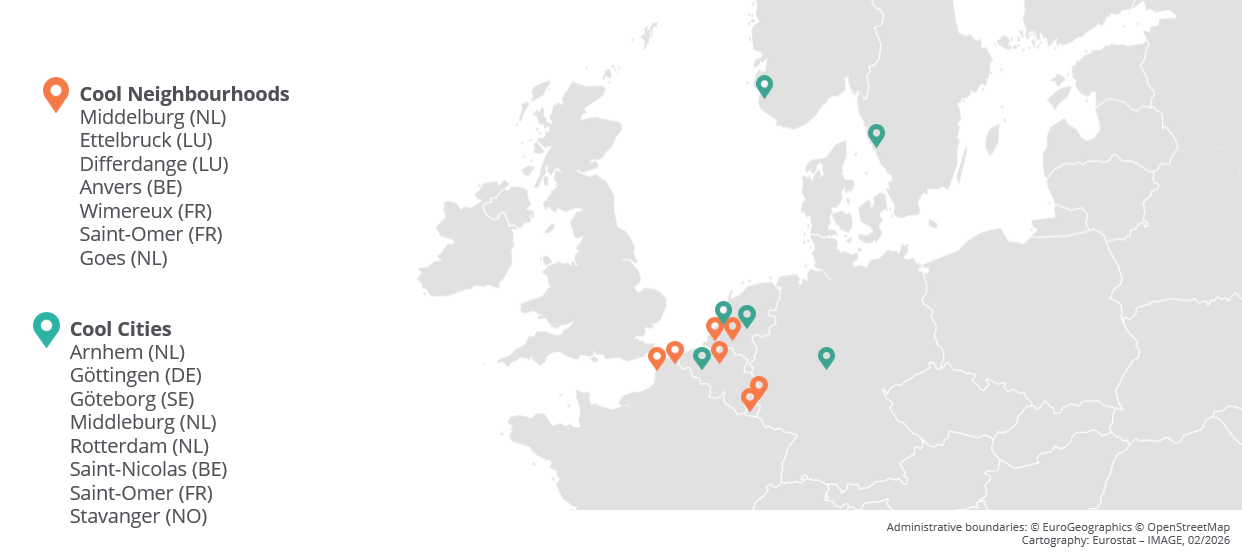
Image: Map showing Interreg project locations across Europe
This geographical spread highlights a key strength of Interreg:
👉 The ability to test solutions in diverse environments and share learning across borders.
From Projects to Programmes of Impact
A central message from the Joint Secretariats is that the true value of Interreg lies beyond individual projects.
It is not only about delivering activities within a partnership — but ensuring that results are:
- Used
- Adapted
- Replicated
👉 Across other cities and regions.
Capitalisation: From Knowledge to Application
The presentation places strong emphasis on capitalisation, defined as:
👉 The transfer and reuse of knowledge generated by Interreg projects
 Image: Capitalisation
concept graphic
Image: Capitalisation
concept graphic
This represents a shift in focus:
- From producing outputs
👉 To ensuring those outputs are applied in real-world contexts.
A strong example highlighted is the BEGIN project, where results have been integrated into large-scale investment programmes exceeding €1 billion.
👉 This demonstrates how project-level innovation can influence policy and investment at scale.
Creating Pathways for Scaling Impact
To support this process, Interreg is introducing new mechanisms specifically designed to accelerate capitalisation.
One key development is the introduction of dedicated capitalisation calls, including:
- Smaller-scale projects (up to €1 million)
- Shorter duration (18–24 months)
- Focus on transferring and applying existing results
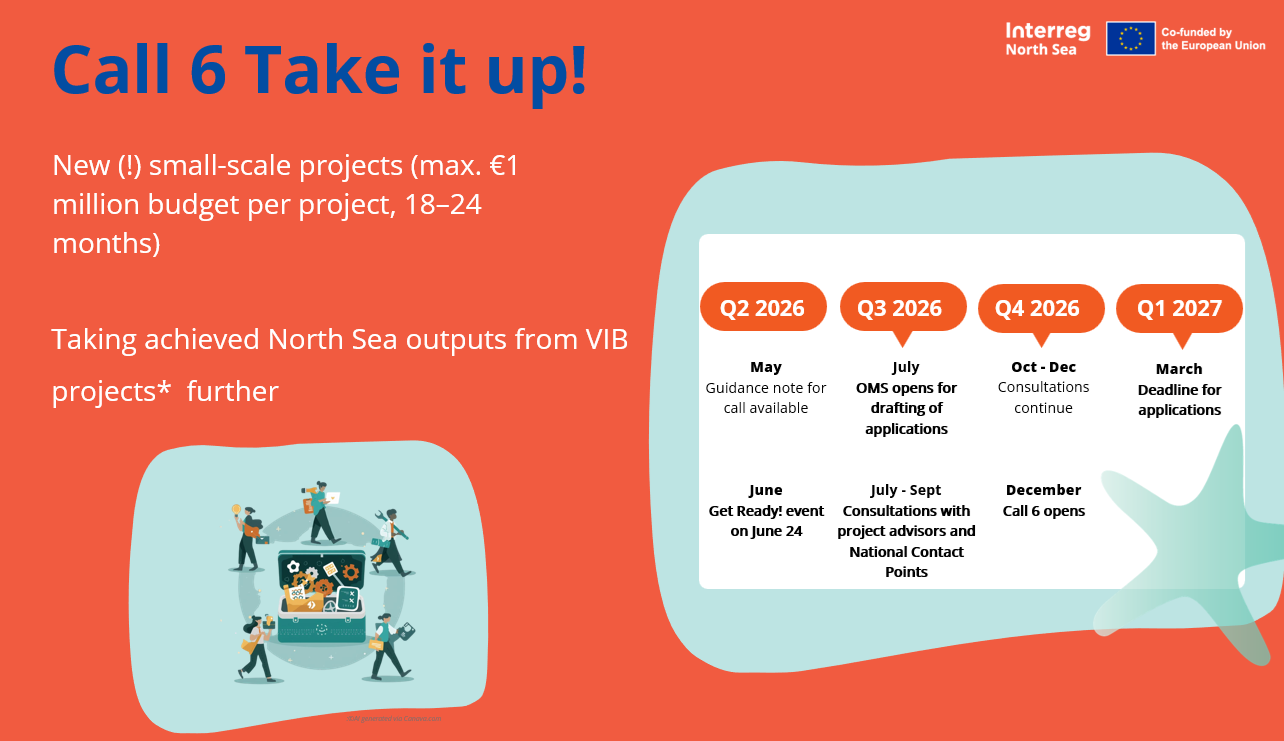
Image: Capitalisation call timeline
These calls are designed to:
- Take proven outputs further
- Support adaptation in new contexts
- Strengthen the link between projects and implementation
For Interreg North West Europe Capitalisation refer to here.
A New Phase for Interreg
The presentation also looks ahead to the future of Interreg programmes.
Key developments include:
- Continued focus on impact and implementation
- Stronger emphasis on transferability and reuse
- Alignment with future programme cycles (post-2027)
👉 The direction is clear:
Interreg is evolving from a project-based model towards a more impact-driven
framework.
Collaboration Across Programmes
The joint mid-term conference itself is a practical example of this evolution.
By bringing together:
- Interreg North-West Europe
- Interreg North Sea Region
The event demonstrated how collaboration across programmes can:
- Strengthen knowledge exchange
- Align approaches
- Increase overall impact
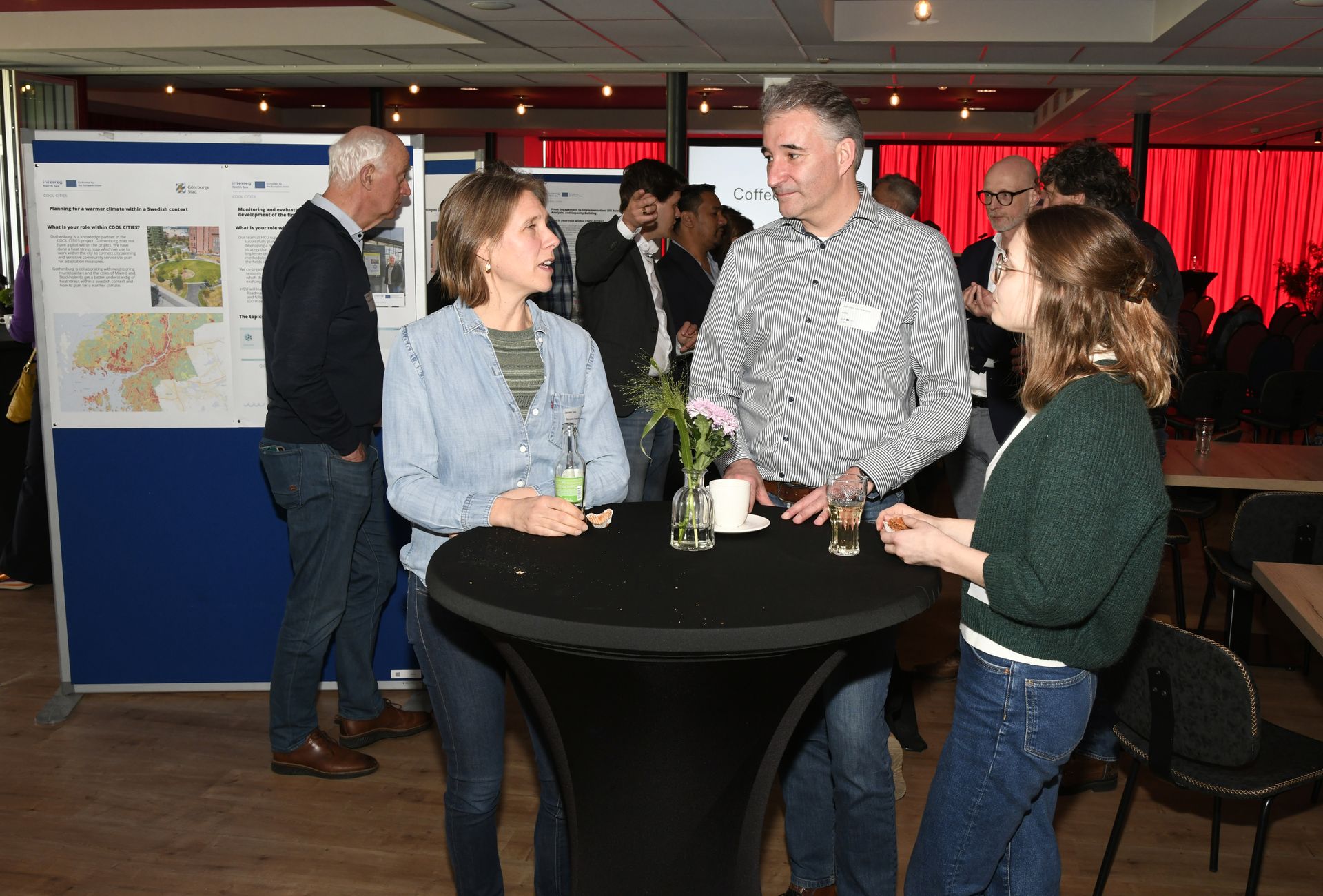
Image: Joint conference / networking moment
Supporting Cities and Regions
For cities and regions, this approach provides clear value.
European cooperation offers:
- Access to tested solutions
- Opportunities to learn from others
- Support for evidence-based decision-making
- A network of peers addressing similar challenges
👉 Importantly, it reduces duplication and accelerates progress.
From Grey to Green at Scale
Throughout the Cool Neighbourhoods project, the transition from Grey to Green has been explored at neighbourhood level.
However, this presentation reinforces that:
👉 Scaling this transition requires cooperation beyond individual cities.
European collaboration enables:
- Faster adoption of solutions
- Greater consistency in approaches
- Stronger collective impact
Conclusion: Stronger Together
The final message of the conference is both simple and powerful:
👉 No city can address climate challenges alone.
Through Interreg, cities and regions are able to:
- Share knowledge
- Test solutions
- Build on each other’s experience
👉 The transition from Grey to Green is not only a local journey — it is a shared European effort.
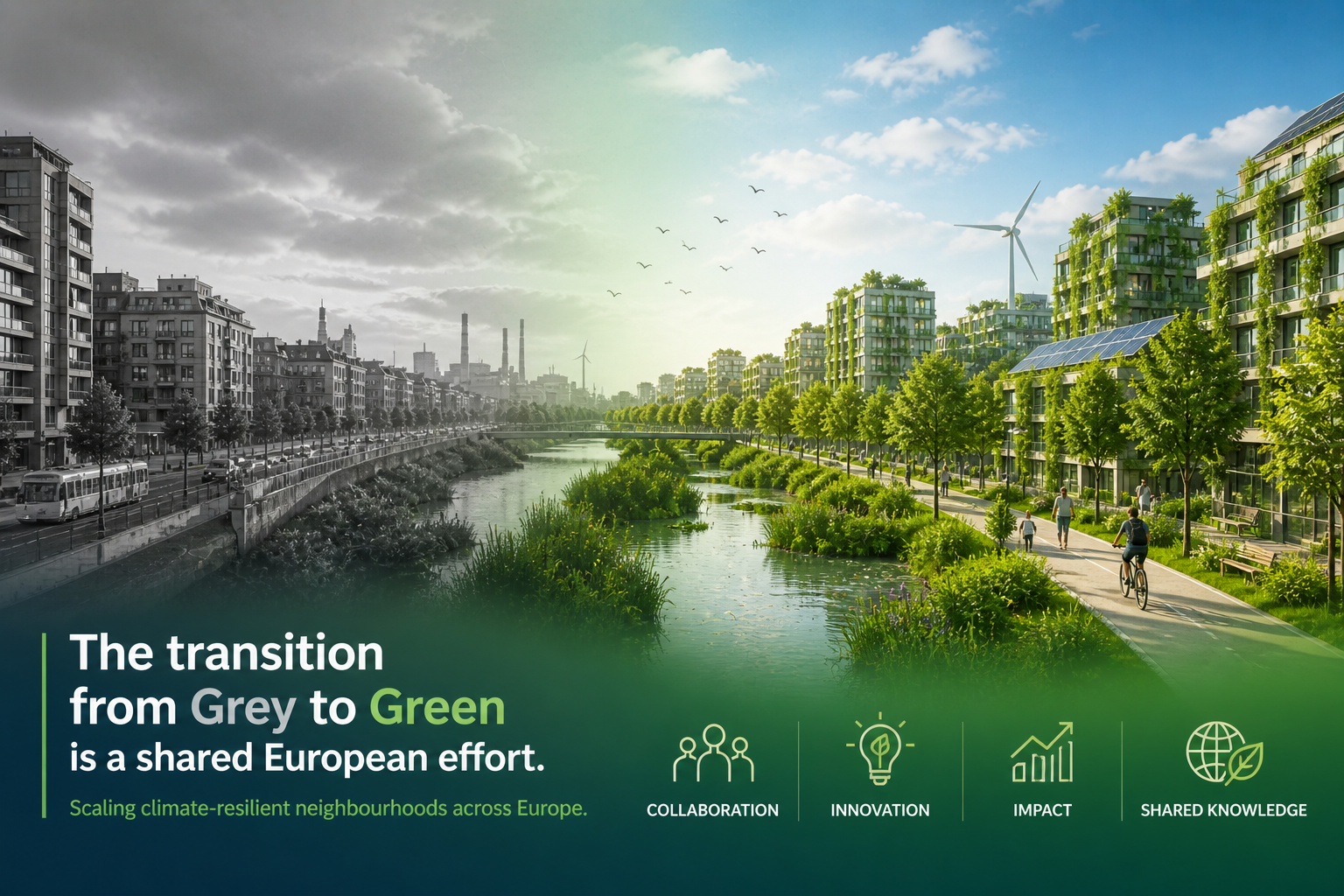
Image: The transition, Grey to Green
Final Reflection on the Series
This article concludes the Cool Neighbourhoods Mid-Term Conference series.
Across the six articles, a clear pathway has emerged:
- Co-creation and citizen engagement
- Scaling Nature-Based Solutions
- Strategic vision and global context
- Prioritisation and equitable planning
- Human-centred design and health
- European cooperation and capitalisation
👉 Together, these elements form a comprehensive framework for improving liveability, strengthening climate resilience, and enabling long-term impact.