At the PIVA pilot in Antwerp, climate adaptation is not just being designed for students — it is being designed with them. As part of the Cool Neighbourhoods programme, the school has become a living laboratory where young people, teachers, and staff work together to create new green learning spaces that support both outdoor education and resilience to heat stress.
Through a series of hands-on workshops, students are shaping ideas, testing concepts, and helping re-imagine their school campus as a cooler, greener, and more welcoming environment.
Youth as Co-Designers, Not Observers
The PIVA pilot demonstrates the power of meaningful youth participation. Rather than being consulted at the very end, students actively contribute at every stage:
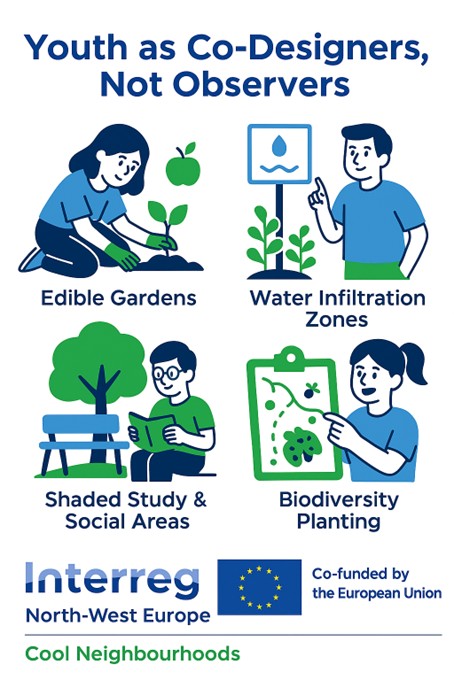
🌱 Edible Gardens
Students help identify planting preferences, irrigation ideas, and seasonal growing opportunities — connecting climate learning with real food production.
💧 Water Infiltration Zones
Workshops explore sustainable drainage, permeable surfaces, and nature-based solutions that help cool the school grounds and manage heavy rainfall.
🌳 Shaded Study & Social Areas
Pupils are designing shaded spots and comfort zones where they can relax, learn, or gather during warm months.
🐞 Biodiversity Planting
Interactive sessions allow students to choose species, map biodiversity corridors, and understand how nature supports urban cooling.
This hands-on involvement ensures that the solutions developed are both climate-smart and student-friendly — grounded in the real needs and experiences of the school community.
Why the PIVA Approach Matters
The PIVA pilot highlights a central strength of the Cool Neighbourhoods project: public engagement as a driver of better climate adaptation.
By empowering young people to co-create their own learning environment, the project is:
- strengthening climate literacy
- building ownership and long-term stewardship
- embedding resilience thinking in daily school life
- ensuring solutions match how students actually use the space
- supporting real behavioural change
This approach transforms climate adaptation from a technical process into a collaborative cultural shift.
A Model for Schools Across Interreg NWE
The outcomes at PIVA show what is possible when youth engagement is placed at the centre of urban and educational resilience efforts. Schools across Interreg North-West Europe can learn from this model:
- Create space for student voice
- Integrate climate topics into practical, visible projects
- Co-design with teachers and young people as equal partners
- Use nature-based solutions as educational tools
- Build green spaces that serve both learning and cooling
PIVA demonstrates that climate resilience is not just infrastructure — it is a shared learning journey.